10 Best Coupling Types for Global Buyers How to Choose?

Time:2026-10-15 Author:Charlotte
0%

Choosing the right Coupling is rarely a matter of picking the most expensive option. Global buyers must match the design with torque, speed, shaft size, misalignment, temperature, and service conditions. A coupling that performs well in a clean factory may fail quickly near salt spray, dust, or repeated shock loads.

Dr. Heinz P. Bloch, a widely published rotating-equipment authority, states a practical principle: “Reliability begins with correct equipment selection, not emergency repair.” This idea frames our guide to the 10 Best Coupling Types for Global Buyers. Each type offers different strengths, including flexible compensation, precise motion control, high torque transmission, or simple maintenance.

The comparison covers jaw, gear, grid, disc, diaphragm, elastomeric, Oldham, beam, universal joint, and fluid couplings. Their differences become clearer through real operating details. A high-speed motor may need low backlash and careful balancing. A conveyor may need shock absorption and easy replacement. A pump system may depend on alignment tolerance and corrosion resistance.

Price alone can mislead.

Buyers should also review bore tolerances, keyways, installation space, spare-part availability, supplier documentation, and regional standards. In practice, selection is not always perfect. Catalog data may omit peak loads, installation errors, or changing ambient conditions. That gap deserves attention.

This guide provides a practical starting point. It encourages engineers, distributors, and procurement teams to question assumptions, verify operating data, and choose a Coupling that remains dependable beyond the first installation.
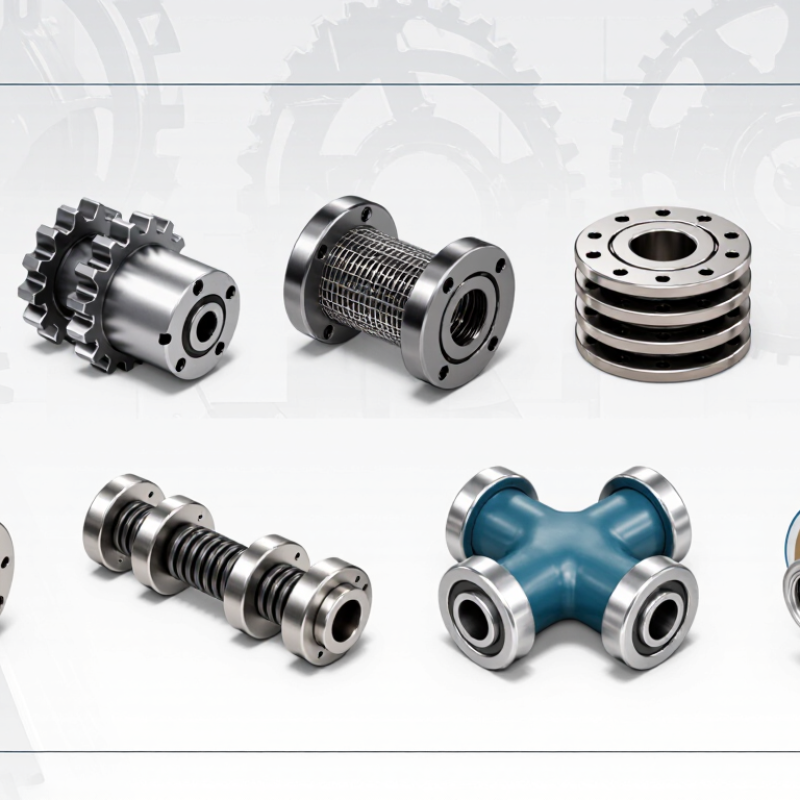
10 Best Coupling Types for Global Buyers How to Choose?

What Are Couplings and Why Do Global Buyers Need Them?

A coupling is a mechanical component that connects two rotating shafts. It transfers torque from a motor to a pump, gearbox, compressor, or conveyor. It can also absorb vibration and tolerate small alignment errors. Without suitable coupling, shafts may wear quickly, while bearings face unnecessary loads.

Global buyers need couplings because machines operate in very different conditions. A food-processing line may require cleanable materials and low contamination risk. A mining conveyor may need strong protection against dust, shock, and uneven loads. Marine equipment faces moisture and corrosion.

Temperature, speed, torque, bore size, and available installation space all affect the choice. Rigid couplings suit accurately aligned shafts. Flexible couplings handle limited misalignment and vibration. Gear, disc, jaw, grid, and fluid couplings serve different operating needs.

Check technical drawings, shaft dimensions, load cycles, and local electrical or mechanical standards before ordering. Ask for material certificates, balancing data, torque ratings, and inspection records. Packaging also matters. A coupling arriving with damaged bores can delay an entire production line. Do not rely on torque alone. Peak loads, starting conditions, maintenance access, and replacement availability may change the result. No selection is perfect. A catalogue rating can mislead when real operating conditions remain unclear. In practice, confirming measurements twice is cheaper than correcting a misaligned installation later.

Which 10 Coupling Types Suit Different Industrial Applications?

Choosing the right coupling depends on the machine, not only the shaft size. Rigid couplings suit accurately aligned shafts with minimal movement. Flexible jaw couplings handle light misalignment and general motor connections. Elastomeric couplings reduce vibration in pumps, fans, and compact drives. Gear couplings carry high torque in heavy conveyors and steel-processing equipment. Grid couplings absorb shock loads in crushers and large compressors.

Disc couplings fit high-speed machinery where precision and low backlash matter. Diaphragm couplings serve turbines and generators that require high-speed stability. Oldham couplings manage parallel offset in small automation systems. Chain couplings work well in low-speed drives exposed to dust, although lubrication remains necessary. Fluid couplings support soft starting in conveyors, crushers, and other systems with severe starting loads.

Ten types, ten different priorities.

Practical selection starts with torque, speed, bore size, misalignment, temperature, and working environment. A coupling exposed to washdown water needs suitable corrosion resistance. A dusty conveyor may need a guarded, easy-to-service design. Check peak torque, not only rated torque.

Ask suppliers for dimensional drawings, material data, test records, and replacement guidance. International buyers should also verify shaft tolerances and installation tools before ordering. A clean comparison chart helps, but it can still mislead. Real operating conditions are often messier than the specification sheet.

How Do Coupling Designs Compare in Performance and Maintenance?

Coupling design affects efficiency, vibration, service life, and maintenance access. Elastomeric couplings absorb shock and tolerate modest misalignment, making them practical for pumps and conveyors. However, heat, oil, and aging can harden their flexible elements. Inspection is simple, but replacement intervals are easy to underestimate.

Grid and gear couplings transmit higher torque in compact spaces. Their metal teeth or grids handle demanding loads, yet lubrication becomes critical. A dry coupling can generate heat, wear rapidly, and damage connected shafts.

Disc and diaphragm couplings usually require less routine lubrication. They offer strong torsional stiffness and suit high-speed equipment, but installation alignment must be precise. Small angular errors matter.

The International Energy Agency’s Energy Efficiency 2023 report states that electric motor systems consume about 70% of industrial electricity. Even minor transmission losses deserve attention. The U.S. Department of Energy’s Motor Systems Market Assessment also estimated that motor-driven systems represented roughly 60% to 70% of industrial electricity use.

These figures make coupling selection an energy decision, not only a mechanical one.

In field maintenance, I have found that access often matters more than catalog torque. That view is imperfect. Operating conditions change. A coupling rated for the load may still fail when contamination, misalignment, or frequent starts are ignored. Record vibration, temperature, lubrication condition, and alignment readings during commissioning. Review them after the first operating season.

What Factors Should Buyers Check Before Selecting a Coupling?

Selecting a coupling begins with the machine, not the catalog. Check transmitted torque, shaft speed, bore size, keyway details, and starting loads. A conveyor with frequent starts needs more protection than a steady-speed fan. Calculate the service factor carefully. Many failures begin with an underestimated peak load.

Alignment deserves close attention. Flexible couplings tolerate limited angular, parallel, and axial movement; they do not correct poor installation. The U.S. Department of Energy’s pumping-system guide estimates that optimized systems can reduce energy use by 20–50%. That figure covers the whole system, not the coupling alone. Still, it shows why alignment, friction, and maintenance deserve measurable attention. Use laser alignment where practical, then verify vibration and temperature after commissioning. A low-cost visual check is useful, but it can miss small offsets.

The operating environment changes the selection. Dust, water, chemicals, heat, and washdown conditions may require sealed or corrosion-resistant construction. Compare elastomer, grid, gear, disc, and diaphragm designs against their maintenance demands. Check torsional stiffness before connecting high-speed motors, compressors, or pumps. Resonance is easy to overlook. Review ISO, API, or applicable equipment requirements, and request test data from the supplier. Lifecycle cost should include lubricant, inspection time, spare parts, and shutdown risk. I have seen couplings selected by bore size alone; that shortcut often looks efficient until the first overload. Leave room for uncertainty, because real alignment and load patterns rarely match a perfect spreadsheet.

How Can Global Buyers Evaluate Suppliers, Standards, and Total Cost?

Choosing a coupling for global projects requires more than comparing thread sizes or unit prices. Start with operating conditions: pressure, temperature, media, vibration, corrosion, and connection frequency. Hydraulic quick-action couplings may suit frequent maintenance, while flanged or threaded designs can support stable, permanent lines. The correct type depends on evidence, not habit.

Supplier evaluation should include material certificates, dimensional reports, pressure-test records, and batch traceability. ISO’s 2022 Survey recorded more than 1.2 million ISO 9001 certificates worldwide. That figure shows certification is widespread, but it does not prove coupling performance. Ask for test methods, acceptance limits, and recent production samples. Small details matter. I would also verify whether the supplier understands ISO, EN, API, or ASTM requirements relevant to the application.

Total cost includes more than the invoice. Add tooling, freight, customs handling, installation time, spare inventory, leakage risk, and replacement labor. UNCTAD’s Review of Maritime Transport 2023 notes that over 80% of global trade by volume moves by sea, so packaging and delivery reliability deserve attention. A cheaper coupling may become expensive after one damaged shipment or repeated seal failure. Build a five-year cost model and compare failure scenarios. It will not be perfect. Real operating data can challenge the spreadsheet. Ask suppliers for field failure rates, warranty terms, and service response times before approving the purchase.

FAQS

How should buyers begin selecting a coupling?

Start with the machine, not only the catalog or shaft diameter. Record torque, speed, bore, keyway, and starting load. A conveyor starting repeatedly needs more protection than a steady fan. It is easy to overlook peak torque.

Which coupling suits accurately aligned shafts?

Rigid couplings fit shafts with little movement and precise alignment. They do not tolerate meaningful angular or parallel offset. Installation must be accurate. Small errors matter.

When are flexible jaw or elastomeric couplings useful?

Jaw couplings suit general motor connections and light misalignment. Elastomeric couplings help reduce vibration in pumps, fans, and compact drives. Check temperature limits and insert condition. The “general-purpose” label can be too broad.

Which couplings handle heavy torque or shock loads?

Gear couplings suit heavy conveyors and steel-processing equipment. Grid couplings absorb shock from crushers and large compressors. Compare peak torque, not just rated torque. Shock loads can arrive suddenly.

When should disc or diaphragm couplings be considered?

Disc couplings fit high-speed equipment requiring precision and low backlash. Diaphragm couplings support turbines and generators needing stable high-speed operation. Check torsional stiffness and resonance risk. High speed leaves little room for guesswork.

Which coupling manages parallel shaft offset in small systems?

Oldham couplings manage parallel offset in small automation equipment. They are useful when compact dimensions matter. Confirm allowable offset and wear limits. The answer may change after real measurements.

Are chain and fluid couplings suitable for difficult drives?

Chain couplings work in low-speed, dusty drives, but they still need lubrication and guarding. Fluid couplings provide softer starts for conveyors and crushers with severe starting loads. Service access matters. Dust makes neglect expensive.

What should buyers verify before ordering and commissioning?

Check temperature, water, chemicals, dust, corrosion, shaft tolerances, and installation tools. Request dimensional drawings, material data, test records, and replacement guidance. Use laser alignment when practical, then check vibration and temperature. A visual check helps, but it can miss small offsets. Include lubricant, inspections, spare parts, and shutdown risk in lifecycle cost. Specifications rarely describe every messy operating condition.

Conclusion

Coupling is a critical mechanical component that connects shafts, transmits torque, and helps compensate for misalignment between rotating equipment. This guide introduces ten common coupling types, including rigid, sleeve, flange, gear, grid, chain, jaw, disc, diaphragm, and flexible couplings, explaining which designs are best suited to pumps, motors, compressors, conveyors, and other industrial applications. It also compares their performance, flexibility, vibration control, load capacity, service life, and maintenance requirements.

For global buyers, selecting the right coupling requires careful evaluation of torque, speed, shaft dimensions, misalignment, operating temperature, installation space, and environmental conditions. Buyers should also verify material quality, applicable technical standards, inspection procedures, customization capability, delivery reliability, and after-sales support. Comparing purchase price with installation, maintenance, replacement, and downtime costs can reveal the true total cost and support a safer, more efficient, and longer-lasting equipment investment.

Charlotte

Charlotte

Charlotte is a seasoned marketing professional with a deep understanding of the company's portfolio and a passion for elevating its presence in the market. With a keen eye for detail and a commitment to excellence, she ensures that our professional blog is regularly updated with insightful articles......