How to Choose the Right Stepper Motor for Your Project?

Time:2026-07-07 Author:Sophia
0%

Choosing the right stepper motor for your project can be daunting. With various types, specs, and applications, it's easy to feel overwhelmed. The stepper motor is vital for precision tasks in robotics, automation, and 3D printing. It offers precise control over movement, enabling smooth operation.

Understanding your project's requirements is crucial. Consider factors like torque, speed, and holding power. Each aspect influences performance significantly. A motor that works well for one application may fail in another. There’s no universal solution. It’s worth noting that not all stepper motors are created equal. Some may lack the power you expect, while others can lead to unnecessary complexity.

Researching different models is essential for informed decisions. Consulting with experts or reading reviews can be beneficial. However, one might overlook specific details after an initial search. Take time to dive deeper. Make sure your chosen stepper motor aligns with your unique project needs. Ultimately, selecting the right stepper motor requires careful consideration and analysis.
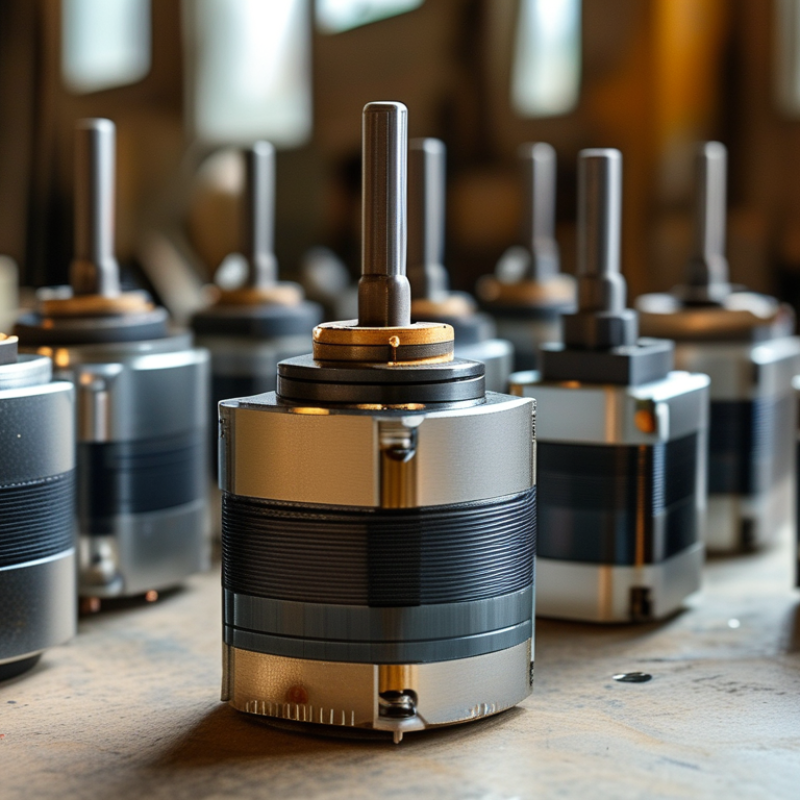
How to Choose the Right Stepper Motor for Your Project?

Understanding the Basics of Stepper Motors and Their Functionality

Stepper motors are vital components in many projects. They convert electrical pulses into precise mechanical movements. Understanding their functionality is crucial for selecting the right type. These motors operate by moving in discrete steps, allowing for controlled motion. Each step corresponds to a specific angle of rotation, making them ideal for applications requiring exact positioning.

When choosing a stepper motor, consider the required torque and speed. Some applications may need high torque at low speeds. Others may prioritize speed over torque. It's essential to match the motor specifications to your project requirements. Review the motor's step resolution and its capacity for holding torque. Failure to assess these factors can lead to unexpected results.

Another consideration is the driver used with the motor. Different drivers provide various levels of control. They influence how smoothly the motor runs as well. If the integration is poor, performance may suffer. Testing different combinations can yield valuable insights. Ultimately, making an informed choice enhances the reliability of the final design. Mistakes can teach lessons, so it’s vital to learn from each step in the process.

Identifying Your Project Requirements and Specifications

When selecting a stepper motor, your project requirements are crucial. Start by defining the torque needed for your application. Higher torque allows for better performance in heavier loads. Consider the speed too. Some projects require rapid movement, while others need precision at low speeds. Identify how these factors link to your overall design.

Another aspect is power consumption. Different stepper motors differ largely in this regard. Assess your energy budget to avoid overheating issues. The size of the motor must also match the physical constraints of your project. Compact designs may limit your choice of motors, leading to suboptimal performance.

Control systems are vital as well. Ensure compatibility with your chosen driver. Not all motors work with every driver setup, which can be a common mistake. Reflect on the nature of your application. If possible, prototype with various motors to see which one best fits your needs. This testing phase can clarify specifications and help refine your choices.

Stepper Motor Torque vs. Speed Characteristics

Comparing Different Types of Stepper Motors

When comparing different types of stepper motors, consider their torque and precision. Unipolar stepper motors offer simpler wiring and easier control. They are commonly used in applications needing moderate precision. However, their torque is typically lower than bipolar steppers. According to a study by the International Journal of Advanced Manufacturing Technology, bipolar steppers can deliver up to 50% more torque than their unipolar counterparts.

Bipolar stepper motors, while slightly more complex, allow for greater control over motion. They operate efficiently in applications like 3D printers and CNC machines, where high precision is crucial. A report from the IEEE Transactions on Industrial Electronics highlights that bipolar motors often achieve resolutions of 1.8 degrees per step. Yet, the extra complexity can lead to challenges in integration. One must ensure the correct power supply and controller compatibility.

Another variant, the closed-loop stepper motor, offers improved performance through feedback systems. These motors minimize issues such as missed steps. A recent industry survey found that applications using closed-loop systems see up to 30% efficiency improvements. Yet, they are often more expensive. Choosing the right stepper motor involves weighing these factors against project requirements and budget constraints. Each type has its advantages and disadvantages that developers need to align with their specific goals.

Evaluating Motor Performance Characteristics

When evaluating stepper motors, understanding motor performance characteristics is crucial. Stepper motors are defined by several key parameters: torque, speed, and resolution. Torque directly impacts the motor's ability to handle loads. According to industry reports, a stepper motor's holding torque can vary significantly, ranging from 0.2 to over 10Nm. Choosing a motor with insufficient torque can lead to inadequate performance.

Speed is another vital factor. Stepper motors operate within specific speed ranges, typically from 200 to 1200 RPM. The ideal speed for your project will depend on the application. For example, higher speeds can lead to reduced torque, which may compromise the motor's performance at certain loads. A thorough understanding of the speed-torque curve can help identify the right motor.

Resolution defines how precisely the motor can position itself. It is often measured in steps per revolution. Common step angles are 1.8 degrees or 0.9 degrees, translating to 200 or 400 steps per revolution. Higher resolution allows for finer control but may require more advanced control systems. Be mindful of the trade-offs: higher resolution can complicate the system design and affect reliability. Therefore, it’s essential to balance these factors to align with project goals.

How to Choose the Right Stepper Motor for Your Project? - Evaluating Motor Performance Characteristics

Motor Type Step Angle (degrees) Holding Torque (Ncm) Rated Current (A) Voltage Rating (V) Max RPM
NEMA 17 1.8 45 1.5 12 100
NEMA 23 1.8 65 2.8 24 80
NEMA 34 1.8 85 4.2 48 60
NEMA 17 (High Torque) 1.8 50 2.0 12 120

Making the Final Decision: Selecting the Ideal Stepper Motor

When selecting the right stepper motor, it’s essential to consider several factors that contribute to performance and efficiency. A report from Research And Markets highlights that stepper motors can improve precision in movement by up to 30% when properly chosen. This statistic underscores the importance of evaluating torque requirements, step angle, and power supply specifications. Each project may demand different capabilities; understanding the specific needs is crucial.

Tips: Match torque ratings to your application's requirements. Too little torque can cause skipping, while too much may lead to overheating.

In addition, the stepper motor’s size and winding configuration matter significantly. Larger motors provide more torque but consume more space. Using a smaller motor could save space but might limit functionality. Achieving the right balance often involves trial and error; initial choices may not always meet your expectations. Industry insights show that 20% of projects face delays due to miscalculated motor specifications.

Tips: Test prototypes before full-scale production. This allows you to make adjustments based on real performance data.

FAQS

: What should I consider when selecting a stepper motor?

: Focus on torque, speed, power consumption, and size. Each factor significantly affects performance.

Why is torque important in a stepper motor?

Higher torque improves performance with heavier loads. Insufficient torque can cause mechanical skipping issues.

How does speed impact stepper motor selection?

Some applications require rapid movement; others need precise control at low speeds. Define your needs clearly.

What role does power consumption play?

Different motors consume varying power. Ensure you stay within your energy budget to prevent overheating.

How do control systems affect motor selection?

Ensure compatibility between the motor and driver. Many common mistakes arise when disregarding this aspect.

Should I prototype with different motors?

Yes, prototyping helps clarify needs. It allows real-world testing and adjustments to specifications before final selection.

Can motor size influence my project?

Definitely. Larger motors provide more torque but require more space. Smaller motors save space but may restrict functionality.

What happens if I choose the wrong motor?

Mismatched specifications can delay projects. Many face setbacks due to incorrect torque or size calculations.

Is it ever okay to skip testing prototypes?

Skipping tests can lead to unexpected issues. Always validate motor choices with real performance data first.

How can I refine my motor selection process?

Reflect on initial choices and learn from any miscalculations. The process often involves some trial and error.

Conclusion

When selecting the right stepper motor for a project, it's crucial to understand the basics of how stepper motors operate, including their unique functionality and the various applications they suit. Identifying specific project requirements, such as torque, speed, and precision, helps narrow down the options. By comparing different types of stepper motors, one can evaluate their performance characteristics, such as holding torque and step angle resolution.

Ultimately, making an informed decision involves balancing the motor's specifications with project needs. Whether the application calls for high precision steps or a robust holding capacity, the ideal stepper motor will enhance project performance and efficiency, ensuring successful completion of the intended task.

Sophia

Sophia

Sophia is a dedicated marketing professional with an exceptional depth of knowledge about her company's products and services. With a keen understanding of market trends and customer needs, she crafts insightful blog posts that not only inform but also engage readers, enriching the company’s online......