What Are the Different Types of Air Compressors?

Time:2026-11-20 Author:Henry
0%

Compressed air powers tools, packaging lines, process equipment, and cleaning systems across many industries. Yet “air compressor” does not describe one machine. A reciprocating compressor uses pistons and often suits intermittent demand. Rotary screw models deliver steady airflow for longer operating hours. Rotary vane and scroll units serve particular compact or specialized applications, while centrifugal compressors are designed for high-volume, continuous service. Each type behaves differently under changing loads.

The U.S. Department of Energy’s Improving Compressed Air System Performance: A Sourcebook for Industry reports that compressed air can account for about 10% of industrial electricity use, and substantially more in some facilities. That makes compressor selection an operating-cost decision, not merely a purchase choice. Still, the machine alone does not determine efficiency. Air demand, pressure settings, leaks, maintenance, and controls all affect performance. Small details matter.

This guide compares the main types of Compressor, explaining how they work, where they fit, and what trade-offs buyers should consider. It also distinguishes oil-lubricated designs from oil-free options, without treating either as universally better. A workshop running a few pneumatic tools has different needs from a plant supplying air around the clock. There is no perfect type for every site. Even published specifications can be hard to compare unless airflow and pressure are measured consistently. The practical choice starts with the job, then checks energy use, reliability, and service requirements.
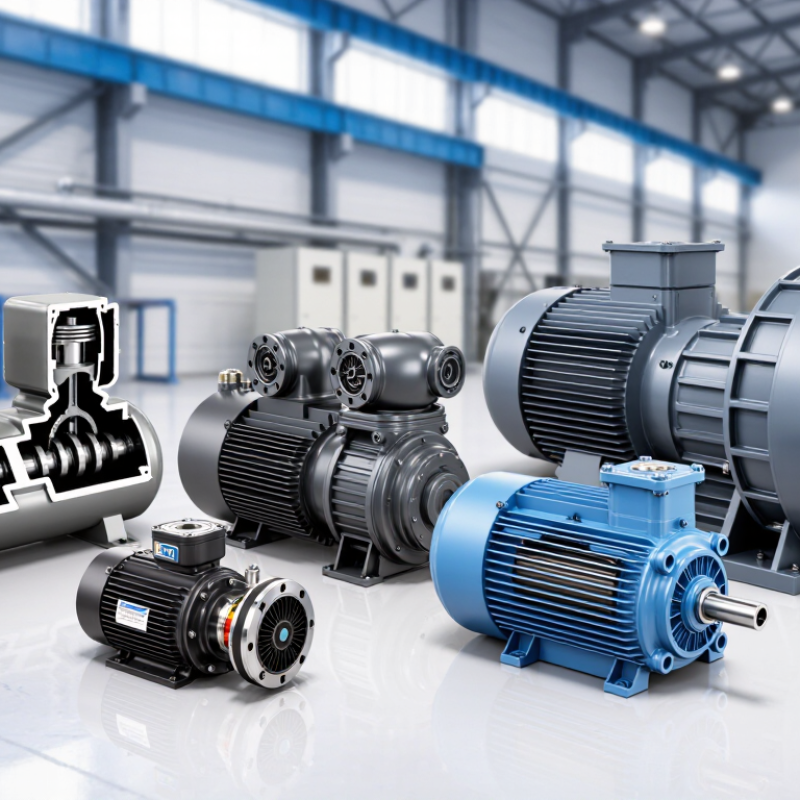
What Are the Different Types of Air Compressors?

How Air Compressors Are Classified

Air compressors are commonly classified by how they raise pressure: positive displacement or dynamic compression. Positive-displacement machines trap air, then reduce its volume. Reciprocating units use a piston and cylinder; rotary-screw units use turning helical rotors. Rotary-vane designs use sliding vanes. Dynamic compressors, including centrifugal models, accelerate air and convert velocity into pressure. They suit different flow and pressure demands. Not interchangeable. A second classification considers lubrication, cooling, compression stages, and mobility. The labels can blur: one machine may be oil-free, multistage, and fixed-installation.

The U.S. Department of Energy’s 2016 report, Improving Compressed Air System Performance: A Sourcebook for Industry, estimates compressed air uses about 10% of industrial electricity. At some facilities, its share can reach 30%. This makes efficiency part of classification, not an afterthought. When comparing types, check demand profile, duty cycle, and air quality at the tool. A small workshop’s intermittent air tool needs differ from a continuous production line. Still, a type label alone cannot predict energy use; controls, leaks, and maintenance matter. Measure real demand.

What Are the Different Types of Air Compressors?

Common compressor types are classified by how they compress air. The chart shows indicative discharge-pressure ranges for typical applications; actual ranges vary by model and configuration.

How to read it: Reciprocating, rotary screw, and scroll compressors use positive displacement. Centrifugal compressors use dynamic compression. The ranges are illustrative, not limits; multistage designs can reach higher pressures.

Positive-Displacement Air Compressors

Positive-displacement air compressors trap a fixed amount of air, then reduce its volume to raise pressure. The principle is simple. The machinery is not. Reciprocating models use pistons moving inside cylinders, making them suitable for intermittent demand and higher pressures. Their output arrives in pulses, so a receiver tank can help smooth pressure swings.

Rotary-screw compressors use intermeshing rotors to compress air more continuously. They often suit facilities with steady demand, but running unloaded can waste energy. The U.S. Department of Energy’s Improving Compressed Air System Performance: A Sourcebook for Industry reports that compressed-air systems use about 10% of industrial electricity, reaching up to 30% in some facilities. That figure covers compressed-air systems broadly, not one compressor type. Still, it shows why matching capacity to actual demand matters.

Selection needs more than a nameplate flow rating. Check pressure, duty cycle, air quality, room temperature, and expected maintenance. A dusty workshop and a clean production room may need different filtration and cooling arrangements. Listen for frequent starts and stops; they can signal poor sizing or a changing load. I’ve seen neat calculations miss real operating patterns. Measure demand over time, and treat estimates as estimates.

Dynamic Air Compressors

Dynamic air compressors raise pressure by accelerating air and then slowing it in a diffuser, converting velocity into pressure. They differ from positive-displacement machines, which trap and reduce a fixed volume.

The main types are centrifugal and axial compressors. Both suit steady, high-volume demand, but their flow paths differ.

In a centrifugal unit, a rotating impeller throws air outward into a diffuser. Think of air entering near the center, then moving through a widening passage.

Axial compressors guide air along the shaft through alternating rows of rotating and stationary blades. They can move very large volumes, though they are more complex and less common in ordinary plant rooms.

Dynamic machines often need to operate near their designed flow range. Too little demand can cause unstable flow, known as surge; controls and suitable system sizing help reduce this risk.

Noise, heat, and filtration matter too. Dust on blades can erode performance. Maintenance needs careful planning.

A site’s demand may vary more than its design estimate suggests, so reviewing actual flow data before selection is worthwhile.

That’s easy to overlook.

Key Differences Among Compressor Types

What Are the Different Types of Air Compressors?

Key Differences Among Compressor Types

Air compressors differ mainly in how they create airflow, and that affects pressure, output, and operating patterns. Reciprocating piston models suit intermittent use and higher pressure needs, such as powering a workshop tool. Rotary screw compressors deliver steadier airflow for longer shifts. Centrifugal compressors move large volumes continuously, but usually suit facilities with stable, high demand. Pressure is not everything. Noise, maintenance access, and air quality matter too.

The U.S. Department of Energy’s Improving Compressed Air System Performance guide reports that compressed air can account for about 10% of industrial electricity use, with the share varying by facility. That makes efficiency and correct sizing important. A compressor that is too large may cycle inefficiently; one that is too small can struggle during simultaneous demand. Oil-injected designs often need filtration to protect sensitive processes, while oil-free designs may reduce contamination risk but still require suitable air treatment. Peak pressure can distract from real demand; it is an easy mistake to make.

Typical Uses of Each Air Compressor Type

Reciprocating compressors fit garages, repair bays, and small workshops. They deliver air in bursts for impact tools, tire inflation, or occasional painting. Small jobs, short cycles. Rotary screw models suit factories running pneumatic tools, packaging lines, and production equipment for long shifts. Their steady airflow is useful when demand stays consistent. Centrifugal compressors serve large facilities with substantial, continuous air demand, such as major process plants. Scroll units can suit quieter, lower-flow settings, including laboratories and instrument rooms.

Choosing by machine type alone can miss the real operating cost. The U.S. Department of Energy’s Improving Compressed Air System Performance sourcebook estimates compressed air uses about 10% of industrial electricity. That makes matching capacity to actual demand important. A screw compressor may waste energy if a workshop runs it lightly all day. A reciprocating unit may struggle with a production line that rarely stops. Real plants are messier than charts suggest; leaks, pressure settings, and duty cycles change the answer.

Tips: Record air demand during a normal shift before sizing equipment. Check pressure at the tool, not only at the compressor. Include the dryer, receiver tank, and filters in the plan. These components affect usable airflow. A little measurement now can prevent an oversized system later.

FAQS

How do dynamic air compressors create pressure?

They speed up air, then slow it in a diffuser. This change converts velocity into pressure. Centrifugal and axial designs are the main types.

How does a centrifugal compressor move air?

A rotating impeller sends air outward from its center. The air then passes through a widening diffuser. Think of air moving from a small opening into a broader passage.

How is an axial compressor different?

It moves air along a shaft through alternating rows of rotating and stationary blades. It can handle very large air volumes, but its design is more complex.

Which compressor type suits different work settings?

Reciprocating models suit short tasks in workshops, such as inflating tires or powering impact tools. Rotary screw models provide steadier air for long production shifts. Centrifugal models fit facilities with large, continuous demand.

What can happen when a dynamic compressor runs below its designed flow?

Unstable flow, called surge, can occur when demand is too low. Controls and suitable system sizing can help reduce this risk. It is easy to overlook.

How should a facility choose compressor capacity?

Record pressure and airflow during a normal work shift. Check pressure at the tool, not only at the compressor. Real plants are messier than charts suggest.

What details besides pressure should buyers consider?

Compare duty cycle, noise, maintenance access, and air-quality needs. Include the dryer, receiver tank, and filters in the system plan. Small details matter.

How can a facility reduce wasted energy and protect air quality?

Compressed air can use about 10% of industrial electricity, though the share varies by facility. Inspect hoses and fittings for leaks. Oil-injected designs often need filtration; oil-free designs may still need suitable air treatment. I would check twice.

Conclusion

Air compressors are commonly classified by how they move and pressurize air. Positive-displacement compressors trap a volume of air and reduce the space it occupies, creating pressure. Common designs include reciprocating and rotary machines, which differ in their moving parts, airflow patterns, and suitability for continuous operation. Dynamic compressors, by contrast, use rapidly moving components to accelerate air and then convert that motion into pressure. Centrifugal and axial designs are examples of this approach.

The main differences among compressor types include their pressure and airflow capabilities, operating consistency, size, and maintenance needs. Positive-displacement models are often suited to applications that require steady pressure or lower-to-moderate air volumes, such as workshops and general equipment operation. Dynamic compressors are typically used where large, continuous airflow is needed, including industrial processes and large ventilation systems. Choosing a Compressor depends on the required airflow, pressure, duty cycle, and operating environment.

Henry

Henry

Henry is a dedicated marketing professional with a profound expertise in the company's offerings. With years of experience in the industry, he possesses an impressive understanding of the market dynamics and consumer behaviors that drive success. Henry is committed to sharing his insights through......