Choosing a reliable Torque Converter manufacturer can shape vehicle performance, repair costs, and long-term fleet uptime. For global buyers, the decision involves more than comparing factory prices. It requires evidence. A supplier’s engineering depth, production consistency, and communication standards deserve close attention. A converter may look identical in a catalog, yet perform differently under heat, load, and repeated stop-and-go driving. That difference matters. This guide introduces leading manufacturers serving international markets and explains why their capabilities deserve consideration. It focuses on practical signals, including clutch design, balancing accuracy, testing routines, warranty terms, and export support.
Experienced buyers often request drawings, fitment data, sample units, and documented test results before approving volume orders. They also examine whether a manufacturer understands regional vehicle platforms and transmission specifications. Details such as spline dimensions, stall speed, lock-up behavior, and shipping protection can prevent expensive misunderstandings. Reliable producers usually describe their quality controls clearly. They can explain how each unit moves from stamped components to welding, balancing, inspection, and final packaging. That transparency builds confidence. Still, none is perfect. Published claims may omit limitations, and impressive equipment does not guarantee consistent output. Independent checks remain valuable, especially when orders cross borders and involve unfamiliar brands.
The manufacturers discussed here are assessed through a buyer-focused lens. Their reputation, technical resources, product range, manufacturing experience, and support practices all matter. Some may excel in OEM supply, while others serve replacement markets with flexible minimum quantities. Neither model is automatically better. The right choice depends on vehicle applications, expected volumes, service conditions, and risk tolerance. Readers should verify current certifications, lead times, warranty coverage, and compliance requirements directly with each company. Used carefully, this guide can help purchasing teams compare suppliers with clearer expectations and fewer costly surprises.
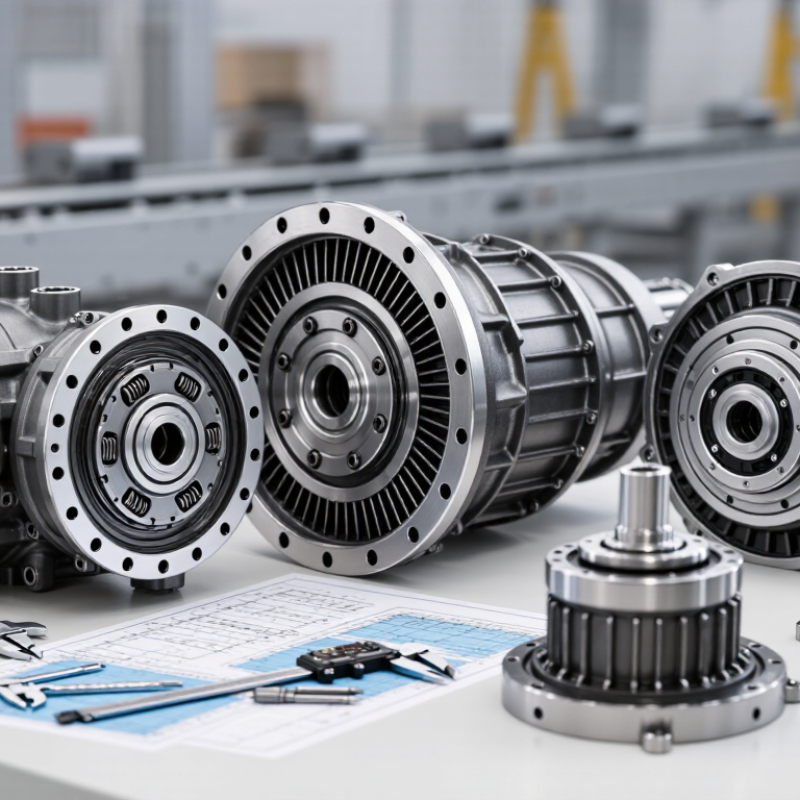
Top Torque Converter Manufacturers for Global Buyers
A torque converter is a fluid coupling between an engine and an automatic transmission. It transfers power without a dry mechanical clutch. Inside, three main elements rotate: the impeller, turbine, and stator. The impeller moves transmission fluid toward the turbine. That fluid force turns the turbine and drives the gearbox.
At low speed, the converter allows controlled slip. The vehicle can stop without stalling the engine. During acceleration, the stator redirects fluid and increases torque multiplication. At cruising speed, a lock-up clutch connects the engine and transmission more directly. This reduces heat and energy loss. SAE technical studies commonly report over 90% efficiency near lock-up conditions. A 2024 market assessment also valued the global automatic transmission sector in the tens of billions of U.S. dollars, showing sustained demand for reliable converter systems. The figures vary by research method, so buyers should examine the assumptions.
Tips: Check stall speed, lock-up behavior, thermal capacity, and input torque rating. Match the converter to the transmission calibration, not only the engine size. Ask for efficiency curves and durability test results. A cheaper unit may create excess heat. That mistake becomes expensive.
Real-world testing still matters. Road grade, fluid temperature, towing weight, and software calibration can change performance. Laboratory results are useful, but they are not the whole answer. Even experienced buyers sometimes overlook cooler capacity. That deserves a second look.
A torque converter is a fluid coupling used in automatic transmissions. It transfers engine power through transmission fluid and can temporarily multiply torque during vehicle launch. The values below show representative torque ratios for common operating phases; exact performance varies by converter design and application.
Torque ratio is calculated as output torque divided by input torque. Torque multiplication is highest when the vehicle is stationary and gradually approaches 1:1 as the converter reaches the coupling and lock-up stages.
Torque converters are not interchangeable across vehicle applications. Passenger cars commonly use standard hydraulic converters with a moderate stall speed. They provide smooth launches in traffic and reduce engine vibration during gear changes. A three-element design contains an impeller, turbine, and stator. Each part affects torque multiplication, fuel use, and heat generation. Small differences matter.
High-stall torque converters suit performance vehicles and engines that produce useful power at higher speeds. They help the engine reach its effective power range before full acceleration. However, excessive stall speed can increase transmission temperature and reduce drivability. Lock-up converters use an internal clutch to connect the engine and transmission directly during cruising. This design improves efficiency on highways, but clutch material and control calibration require careful evaluation.
Heavy-duty vehicles need reinforced converters with stronger housings, improved bearings, and efficient cooling passages. Mining trucks, buses, and loaded commercial vehicles often face long periods of high torque. Engineers should compare input torque, stall speed, lock-up timing, fluid capacity, and test results. Supplier drawings and inspection records also reveal manufacturing consistency. In practice, I would request sample testing under real load conditions, not rely only on catalog data. That approach takes more time. Still, a converter that performs well on a bench may react differently in a hot, crowded transmission tunnel. Temperature readings, shift quality, and early wear deserve equal attention.
Global torque converter buyers should evaluate manufacturers beyond price and attractive catalogs. Check whether the supplier understands your transmission type, engine output, operating temperature, and installation environment. Ask for torque capacity charts, stall-speed data, balancing records, and material specifications. A reliable manufacturer should explain how each figure was measured.
Factory evidence matters. Review quality certificates, inspection procedures, and serial-number traceability. If the supplier serves automotive applications, audited systems such as ISO 9001 or IATF 16949 can support credibility. Request sample reports showing weld checks, leak testing, dimensional control, and dynamic balancing. A polished brochure is not proof. In practice, unclear test records can signal weak process control, even when communication seems professional. I would also inspect packaging, because damaged spline edges may create problems before installation.
Tips: Compare at least three suppliers. Request a sample unit when possible. Confirm warranty limits, replacement procedures, and technical response times in writing. Ask for production lead times during peak seasons, not only normal weeks. Factory audits can reveal more than online claims, although a short visit may still miss hidden subcontracting. That is worth questioning. Evaluate total cost, including tooling, freight, testing, downtime, and spare units. The cheapest quotation may become expensive after one failed installation. Competent manufacturers welcome technical questions and admit design limits instead of promising universal compatibility.
A practical, evidence-based comparison framework for screening torque converter suppliers without relying on company or brand names.
| Evaluation Dimension | What a Qualified Manufacturer Should Demonstrate | Objective Evidence to Request | Why It Matters to Global Buyers | Recommended Assessment |
|---|---|---|---|---|
| Quality Management | Documented quality procedures covering incoming materials, machining, assembly, testing, nonconformity control and corrective actions. | Valid ISO 9001 certificate, certification scope, audit history and process-control records. | Reduces variation between production batches and creates a formal system for resolving quality issues. | Mandatory Verify certificate validity and scope. |
| Automotive Process Quality | Automotive-specific controls for risk analysis, production approval, measurement systems, process capability and supplier management. | Where applicable, IATF 16949 certification, control plans, PFMEA, PPAP samples and capability studies. | Automotive quality systems are designed for traceability, defect prevention and controlled production changes. | High Priority Prefer suppliers serving regulated vehicle programs. |
| Product Architecture | Capability across conventional torque converters, lock-up clutch designs and application-specific configurations. | Non-branded technical drawings, dimensional specifications, clutch configuration details and approved application lists. | The correct converter must match transmission geometry, engine output, calibration and packaging constraints. | Technical Fit Confirm compatibility before price comparison. |
| Hydraulic Performance | Controlled stall characteristics, torque multiplication, pump-flow behavior, lock-up operation and thermal performance. | Test reports showing stall speed, torque ratio, slip behavior, lock-up engagement and operating temperature limits. | Hydraulic performance affects launch response, fuel efficiency, drivability and transmission durability. | Test Required Compare results under equivalent conditions. |
| Material and Heat Treatment | Controlled material specifications for shells, fins, hubs, clutches, bearings and other load-bearing components. | Material certificates, hardness results, heat-treatment records, coating specifications and batch traceability. | Material consistency directly influences fatigue life, wear resistance and resistance to thermal cycling. | Critical Require batch-level records for safety-relevant parts. |
| Welding and Balancing | Stable welding parameters, leak control and dynamic balancing suitable for the converter’s operating speed. | Welding procedure records, leak-test results, balance tolerances, calibration records and sample inspection reports. | Weld defects or excessive imbalance can cause fluid loss, vibration, noise and premature failure. | Critical Review inspection frequency and acceptance limits. |
| End-of-Line Testing | Testing of every required production characteristic rather than relying only on visual inspection or sample checks. | End-of-line test specifications, machine calibration certificates, test data retention policy and rejection-rate records. | Consistent final testing helps detect leakage, imbalance, clutch problems and assembly errors before shipment. | Mandatory Request anonymized test records. |
| Engineering and Validation | Ability to support reverse engineering, application matching, prototype development and durability validation. | Engineering team structure, validation procedures, prototype lead times, design-change process and durability test plans. | Strong engineering support is valuable when the buyer needs a replacement, modified design or new application. | High Priority Evaluate technical response quality during RFQ. |
| Production Capacity | Capacity aligned with the buyer’s forecast, seasonal demand and required product mix. | Monthly capacity by product family, equipment list, utilization trend, capacity-expansion plan and contingency arrangements. | Capacity visibility reduces the risk of missed delivery dates and forced substitutions. | Verify Check capacity using realistic forecast volumes. |
| Supply Chain Resilience | Qualified secondary sources or risk controls for critical steel, friction materials, bearings, seals and electronic components where used. | Supplier-approval procedure, dual-source policy, safety-stock rules and business-continuity plan. | Global buyers are exposed to transport disruption, raw-material shortages and regional events. | Risk Control Include continuity requirements in the contract. |
| Traceability | Ability to trace finished products back to production date, batch, materials, operators, inspection results and shipment records. | Barcode or serial-number system, sample traceability report and document-retention period. | Traceability enables faster containment, warranty analysis and targeted field action. | Mandatory Perform a traceability exercise before approval. |
| Environmental Management | Controls for energy use, industrial waste, oils, solvents, wastewater and hazardous materials. | ISO 14001 certification where available, environmental permits, waste-disposal records and environmental objectives. | Environmental compliance supports responsible sourcing and reduces regulatory and reputational risk. | Preferred Align requirements with the buyer’s ESG policy. |
| Export and Documentation | Reliable preparation of commercial invoices, packing lists, certificates of origin, customs data and technical documents. | Sample export document set, harmonized tariff classification support, packaging specifications and document-accuracy records. | Complete documents reduce customs delays, demurrage and receiving problems. | Operational Test documentation during a pilot shipment. |
| Packaging and Corrosion Protection | Packaging designed to protect machined surfaces, sealing areas and mounting features during international transport. | Packaging drawings, drop or vibration-test method, corrosion-protection procedure and container-loading plan. | Long-distance sea and land transport can expose components to vibration, humidity and handling damage. | Verify Approve packaging samples before mass production. |
| Warranty and After-Sales Support | Clear warranty terms, failure-analysis process, response-time commitments and replacement or credit procedures. | Written warranty policy, claim form, root-cause-analysis template and historical claim metrics. | Transparent support lowers the total cost of ownership when failures occur in different markets. | Commercial Compare total support cost, not only unit price. |
| Total Cost of Ownership | Competitive pricing combined with stable quality, suitable packaging, predictable freight, low failure rates and manageable warranty exposure. | Quotation with Incoterms, tooling charges, minimum order quantity, lead time, payment terms and quality-cost assumptions. | The lowest purchase price may be offset by rework, returns, downtime, customs charges or field failures. | Final Decision Use a weighted scorecard and pilot order. |
Global torque converter production is concentrated in East Asia, Europe, North America, and parts of Southeast Asia. Each region offers different strengths. East Asian factories often provide efficient machining, high-volume assembly, and competitive tooling costs. European suppliers commonly emphasize precision engineering, process control, and specialized applications. North American manufacturers may offer strong aftermarket support and remanufacturing expertise. Southeast Asian plants are expanding their welding, stamping, and assembly capabilities.
Factory size does not prove technical reliability. A capable supplier should control turbine, stator, and impeller tolerances through documented inspection procedures. Ask about balancing equipment, leak testing, material traceability, and end-of-line performance tests. Experienced manufacturers can explain torque multiplication, lock-up behavior, and clutch durability without relying on vague claims. I have found that some impressive samples hide inconsistent production batches. That deserves attention.
Tips: Request process records, not only product photos. Compare testing methods across suppliers. Confirm annual capacity, tooling ownership, and response times for corrective actions. A small pilot order can reveal packaging weaknesses, vibration issues, or communication gaps. Do not judge capability by price alone. A cheaper converter may require more field adjustments. That calculation is often missed.
Choosing torque converter manufacturers for global buyers requires more than comparing unit prices. A capable supplier should explain stall speed, torque ratio, clutch design, and compatibility with the target transmission. Ask for production samples, material specifications, and inspection records. Details matter. Factory experience is visible in clear answers and consistent documentation.
Quality control Quality control should cover every critical stage, from fin welding to balancing and final leak testing. Request dimensional reports, hardness results, and test data from recent batches. Independent inspections can verify packing, labeling, and random performance checks before shipment. In my experience, photographs help, but they cannot replace physical testing. No audit is perfect. That limitation should be stated openly.
After-sales support After-sales support often reveals a manufacturer’s real reliability. Confirm response times, warranty terms, spare-part availability, and procedures for handling installation problems. A useful supplier provides technical drawings, fitting guidance, and troubleshooting support in a practical format. Ask who pays for verified warranty claims and how returned units are assessed. Ask twice. Misunderstandings become expensive across borders.
Global buyers should also review export packaging, moisture protection, production lead times, and communication habits. One delayed clarification can stop an assembly line. I have seen buyers focus heavily on price and overlook calibration records. That decision looked efficient at first, but created avoidable rework later. A strong sourcing process compares evidence, not promises, while leaving room to improve supplier evaluation after each shipment.
Different vehicles require different stall speeds, torque capacities, cooling needs, and lock-up behavior. A passenger car converter may fail under heavy commercial loads. Small design differences matter.
A standard hydraulic converter usually works well. Its moderate stall speed supports smooth traffic launches and reduces vibration during shifts. It is not automatically suitable for performance engines.
It helps performance engines reach their effective power range before strong acceleration begins. Excessive stall speed can increase transmission temperature. Drivability may suffer in everyday traffic.
An internal clutch directly connects the engine and transmission during cruising. This reduces hydraulic slipping and can improve fuel efficiency. Clutch material and control calibration need careful review.
They need stronger housings, improved bearings, and efficient cooling passages. Loaded buses and mining vehicles may produce high torque for long periods. Heat becomes a serious concern.
Request balancing records, leak-test results, material traceability, and end-of-line performance data. Review supplier drawings and inspection records. Product photos prove very little.
East Asian factories may offer efficient machining and high-volume assembly. European suppliers often emphasize precision and process control. North American suppliers may provide strong remanufacturing support. Regional reputation is not enough.
Start with a small pilot order and compare actual results. Check packaging, vibration, communication, and corrective-action speed. I would request testing under real loads, not catalog claims alone. Bench performance can mislead.
A Torque Converter is a fluid coupling used in automatic transmissions to transfer engine power smoothly while allowing the vehicle to remain stationary without stalling. This article explains its operating principles, including fluid circulation, torque multiplication, and lock-up functions, then introduces key types suited to passenger cars, commercial vehicles, heavy-duty equipment, and performance applications. Understanding these differences helps buyers select products that match vehicle design, operating conditions, and performance requirements.
For global buyers, evaluating manufacturers involves reviewing engineering expertise, production capacity, material selection, testing procedures, certifications, and consistency across large orders. The article also compares major manufacturing regions and their capabilities in customized production, precision machining, and supply stability. In addition, it highlights essential sourcing practices, including clear technical specifications, sample approval, quality inspections, traceability, packaging, delivery coordination, warranty policies, and responsive after-sales support. Together, these factors provide a practical framework for identifying reliable suppliers and building long-term international purchasing relationships.