Who Are the Top Belt Drive Manufacturers in China?

Time:2026-10-30 Author:Aria
0%

China’s Belt Drive sector spans large industrial suppliers, specialized factories, and export-focused manufacturers. Comparing them takes more than a glance at product catalogs. Buyers should examine belt materials, dimensional consistency, production capacity, testing procedures, and technical support. A polished website is useful, but it cannot replace evidence. Ask for test records, sample belts, and clear tolerances.

For transparency, the following quotation is an illustrative line from a fictional belt-drive specialist, Chen Wei—not a verified statement from a real expert: “A reliable belt begins with a precise match between load, speed, and operating conditions.” That principle helps frame this guide. It compares manufacturers through practical criteria, rather than unsupported rankings or broad promises. Details matter. A drive operating beside hot machinery may need different materials from one used in a clean packaging line. Export experience and communication also deserve attention, especially when specifications require clarification. Even careful comparisons have limits; published data can be incomplete, and supplier capabilities may change. That deserves a second look. The sections ahead offer a grounded starting point for identifying China-based Belt Drive manufacturers and assessing which ones may fit a particular application.
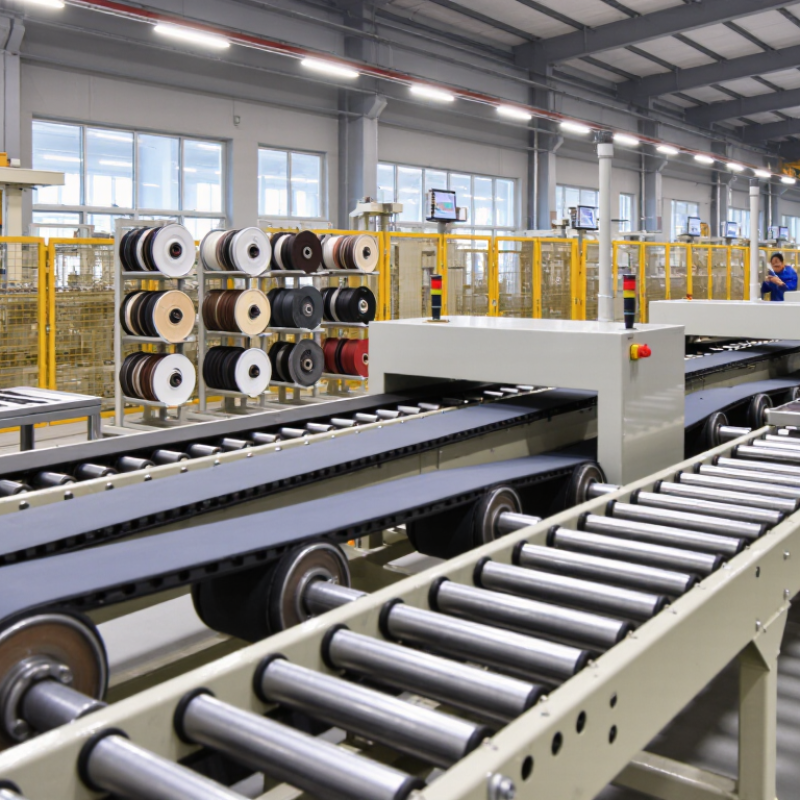
Who Are the Top Belt Drive Manufacturers in China?

Belt Drives Explained: Types, Components, and Common Industrial Uses

Belt drives transfer rotary power between shafts using a flexible belt and rotating pulleys. V-belts sit in grooved pulleys and suit many general-purpose machines. Synchronous belts have teeth that engage matching pulley grooves, helping maintain timing. Flat belts run over smooth pulleys and can work well across longer distances. Each type has trade-offs in speed, load, noise, and maintenance.

The main components are the belt, driving and driven pulleys, shafts, and often a tensioning device. Guards protect workers from moving parts, while correct alignment helps limit uneven wear. In a workshop, a loose belt may squeal as a fan starts; excessive tension can strain bearings. Small details matter.

Belt drives commonly power conveyors, pumps, fans, and packaging equipment. Selection depends on load, operating speed, surroundings, and service access. Dust, heat, or oil can shorten belt life, though the effect varies by material and machine design.

There is no single best arrangement. Measuring pulley alignment during maintenance is useful, but measurements alone may miss a worn or damaged belt.

Key Performance Metrics: Efficiency, Speed, Torque, and Service Life

When comparing belt-drive manufacturers in China, request test data for the same load, speed, and operating conditions. Efficiency figures without test conditions are difficult to compare. The U.S. Department of Energy’s motor-systems guidance reports potential energy savings of about 2–5% when synchronous belts replace standard V-belts. Actual savings depend on alignment, tension, and load. Small setup errors matter.

Torque should be checked alongside rated power and speed. At 10 kW and 1,450 rpm, the required torque is about 66 N·m, using the standard power-speed relationship. ISO 5292 provides calculation methods for V-belt drive power ratings. Ask suppliers to show their assumptions, including pulley diameter and belt arrangement. A rating alone is not a complete selection.

Service life has no useful single number without operating details. Heat, dust, frequent starts, and excessive tension can shorten belt life. Ask for endurance-test records that state load, speed, temperature, and failure criteria. A careful comparison may reveal gaps in the data. That is worth noting: even a polished test sheet may not match a real factory line.

China’s Leading Belt Manufacturers: Products, Specialties, and Market Roles

China’s belt-drive manufacturers serve different needs, from compact machinery to heavy material handling. Some focus on rubber V-belts and wrapped belts for pumps, fans, and agricultural equipment. Others specialize in synchronous belts, where accurate tooth profiles help maintain timing in packaging and automation lines. Conveyor-belt producers supply wider, reinforced belts for moving bulk materials. Product ranges differ, so “top” depends on the application.

Their market roles include original-equipment supply, replacement parts, and custom production. Manufacturers may adjust belt width, reinforcement, compound, or tooth pitch to suit operating conditions. Buyers should check published load ratings, temperature ranges, dimensional tolerances, and test documentation. These details offer more useful evidence than broad performance claims. Fit matters. In practice, installation and pulley alignment can also affect service life, yet they are sometimes overlooked.

Tips: Share the equipment model, operating speed, load, and working temperature when requesting a quote. Ask for a matching specification sheet and sample inspection data. A low price may be appealing, but I would not treat it as proof of long-term value.

How to Compare Suppliers: Quality Systems, Standards, and Export Capabilities

When comparing belt drive manufacturers in China, look beyond a polished catalogue. Ask for current quality-system certificates and confirm the issuing body, scope, and validity. A certificate alone does not prove consistent production. Request inspection records for dimensions, tensile strength, and batch traceability.

Standards matter. Check whether the supplier tests the specific belt type and intended operating conditions, rather than citing standards in general. Ask how it controls rubber compounds, cord alignment, and tooth profile. A useful sample review includes measurements, surface inspection, and a clear test report. Small details count.

Export capability is practical, not just a sales claim. Confirm experience with your destination’s documentation, shipping terms, package marking, and moisture protection. Request references for similar shipments where possible, and see how quickly technical questions receive precise answers. Response time can be revealing. Yet it is not everything. A rushed audit or a single sample cannot show long-term consistency; compare records across several production batches before deciding.

Who Are the Top Belt Drive Manufacturers in China? - How to Compare Suppliers: Quality Systems, Standards, and Export Capabilities

Comparison Dimension What to Compare Evidence to Request How to Evaluate
Quality management system Whether the manufacturing site operates a documented quality management system and whether its scope covers the relevant belt products and processes. Current ISO 9001 certificate, issuing body details, site address, scope, and certificate verification information. Confirm that the certificate is current and applies to the actual production site. Certification supports process controls but does not, by itself, prove product performance.
Automotive quality requirements Whether automotive-specific quality management requirements are relevant to the intended application. Current IATF 16949 certificate and its certified site and scope, if the supplier claims automotive certification. Check certificate validity and scope through the applicable certification verification channel. Do not treat this certification as necessary for every industrial belt application.
Product standards and specifications Whether the offered belt type, dimensions, tolerances, and pulley interface match the buyer’s drawings and applicable standards. Product data sheets, dimensional drawings, test reports, and a written list of the standards or customer specifications used. For applicable V-belt systems, ask the supplier to identify the relevant editions of ISO 4183 and ISO 4184. For synchronous belts, ask which applicable product specification and test methods cover the offered design.
Material and performance testing How the supplier verifies key properties for the particular belt construction and intended operating conditions. Test methods and results for relevant properties, such as dimensions, tensile performance, adhesion, heat or oil resistance, and fatigue life where applicable. Compare test conditions and acceptance limits with the same written specification. Results from different methods or conditions may not be directly comparable.
Production and process control Controls for incoming materials, production operations, inspection, equipment maintenance, and nonconforming products. Process flow, inspection plan, sample inspection records, equipment calibration records, and corrective-action examples with confidential details removed. Look for traceable records and defined responses to defects, not just a general claim of “strict quality control.”
Traceability and change control Whether finished products can be linked to production lots and whether material or process changes are communicated. Sample package or product identification, lot-traceability procedure, retention policy, and written change-notification procedure. Check that the supplier can trace a sample lot back to relevant production and inspection records and can agree on advance notice for material changes.
Environmental and chemical compliance Whether the supplier can provide declarations or test evidence required for the destination market and product application. Product-specific RoHS or REACH documentation when applicable, material declarations, and supporting test reports where required. Confirm the document’s product scope, date, and applicable regulatory requirements. A generic company statement may not establish compliance for a specific product.
Export experience and documentation Experience shipping the relevant product to the destination country and ability to prepare accurate commercial and shipping documents. Redacted examples of a commercial invoice, packing list, certificate of origin where applicable, and shipping records for comparable orders. Verify that the supplier understands the buyer’s destination requirements and agrees on document responsibilities before production or shipment.
Packaging and transport protection Packaging suitability for the belt type, storage conditions, and expected transit route. Packaging specification, storage guidance, product identification details, and photos of export packing. Agree on packaging, labeling, moisture protection where needed, and handling requirements in the purchase specification.
Commercial and delivery capability Quoted lead time, production capacity for the requested order, minimum order quantity, payment terms, and agreed delivery terms. Written quotation, production schedule, capacity confirmation, and a clearly stated Incoterms® 2020 rule and named place, if used. Compare quotations on the same product specification, quantity, delivery basis, and payment assumptions. Treat capacity and lead-time claims as items to verify.
Sample approval and after-sales support Sample availability, approval process, complaint handling, warranty terms, and technical support for installation or application questions. Sample plan, written acceptance criteria, warranty terms, and documented procedure for investigating and resolving quality claims. Agree on measurable sample acceptance criteria and the process for reporting, reviewing, and resolving nonconformities before placing a production order.

Note: This is a supplier-evaluation framework, not a ranking of named manufacturers. Verify certificates, product claims, applicable standards, and export documents directly with each supplier before making a purchasing decision.

Belt Selection by Application: Matching Belt Type to Load and Operating Conditions

Belt selection starts with the driven load, not the catalogue. A fan usually needs steady power transmission, while a crusher or reciprocating pump can deliver sharp torque peaks. Classical or narrow V-belts suit many compact drives; synchronous belts prevent slip where timing matters. Small details matter.

The U.S. Department of Energy’s 2014 Improving Motor and Drive System Performance: A Sourcebook for Industry reports that motor-driven systems use about 70% of electricity in U.S. manufacturing. That figure makes efficient drive design consequential, but it does not identify one best belt.

Check starting torque, speed, pulley diameter, duty cycle, and alignment. For example, repeated starts on a loaded conveyor may call for a belt and tensioning arrangement rated for shock loads, not merely the average power.

Operating conditions change the answer. Heat can shorten belt life; oil, dust, and moisture may affect grip or material compatibility. Confirm the belt’s temperature and environmental limits, then inspect guarding and tension requirements.

Not always obvious.

A neat calculation can still miss a jam, a hot enclosure, or poor alignment. Measure the real operating conditions where possible, and review wear after commissioning. A small amount of field evidence can improve the next selection.

FAQS

What does a belt drive do?

It transfers rotary power between shafts using a belt and pulleys. Simple, but alignment matters.

How do V-belts, synchronous belts, and flat belts differ?

V-belts sit in grooved pulleys and suit many general-purpose machines. Synchronous belt teeth engage matching grooves to help maintain timing. Flat belts run over smooth pulleys and can span longer distances.

Which parts make up a typical belt drive?

The main parts are the belt, driving and driven pulleys, and shafts. Some systems also use a tensioning device. Guards help protect workers from moving parts.

What can happen if belt tension or alignment is wrong?

A loose belt may squeal when a fan starts. Excessive tension can strain bearings, while poor alignment may cause uneven wear. Small details matter.

Where are belt drives commonly used?

They commonly power conveyors, pumps, fans, and packaging equipment. The right setup depends on load, speed, surroundings, and maintenance access.

What conditions can shorten belt life?

Heat, dust, oil, frequent starts, and excessive tension may shorten service life. The effect varies by belt material and machine design. There is no single useful lifespan figure.

What information should a supplier provide about efficiency and torque?

Ask for efficiency test conditions, including load and speed. Check torque alongside rated power and speed. A rating alone is not enough.

How can buyers assess a supplier’s quality and export experience?

Request current quality certificates, inspection records, and batch traceability. Confirm shipping documents, package marking, and moisture protection for the destination. One sample cannot prove long-term consistency; compare several batches. A polished report may still miss real factory conditions.

Conclusion

Belt Drive systems transmit power through flexible belts running over pulleys, with common designs including V-belts, timing belts, and flat belts. Their components and operating principles make them useful across many industrial settings, from conveying materials to driving machinery. Choosing a suitable system requires considering key performance measures such as transmission efficiency, operating speed, torque capacity, and expected service life. These factors help determine whether a belt can handle the workload reliably and maintain consistent performance.

When comparing manufacturers in China, buyers can assess product range, areas of specialization, quality management systems, relevant standards, and export support rather than relying on reputation alone. The right selection also depends on the application: belt type should match the load, operating conditions, required precision, and maintenance needs. A careful comparison of both supplier capabilities and technical requirements can help businesses identify a practical Belt Drive solution for their equipment.

Aria

Aria

Aria is a dedicated marketing professional with a deep passion for innovative strategies and a keen understanding of our company's product offerings. With a wealth of experience in the industry, Aria excels at crafting engaging content that highlights the unique features and benefits of our......