Top Electric Actuator Manufacturers in the World

Time:2026-10-05 Author:Mason
0%

The global Electric Actuator market is changing quietly, yet its impact is visible everywhere. A quarter-turn valve moves. A conveyor gate opens. A robotic arm repeats the same precise motion for thousands of cycles. Behind these actions are manufacturers competing through torque, accuracy, durability, control, and service.

This guide examines the top Electric Actuator manufacturers in the world. It considers companies serving water treatment, process automation, energy, food production, and industrial machinery. Product range matters, but it is not the only measure. Engineers also inspect ingress protection, duty ratings, feedback systems, emergency operation, integration options, and spare-part availability. A compact actuator may suit a clean factory line, while a sealed, corrosion-resistant model may be essential near the coast. Small details decide performance.

Jim Pinto, a recognized automation consultant and industry commentator, wrote, “Automation is about reducing the need for human work.” His observation remains relevant, although it needs a practical qualification: reliable automation must also reduce errors, maintenance risk, and unplanned downtime. That is where actuator design becomes important.

No ranking is permanently correct. Regional support, certification requirements, installation conditions, and project budgets can change the result. Some manufacturers lead in heavy-duty valve control. Others excel in compact motion systems or intelligent diagnostics. This overview therefore avoids treating brand visibility as proof of technical superiority. It compares established capabilities with real operating needs, while acknowledging that published specifications do not always reveal field performance. Ask difficult questions. Test the details.
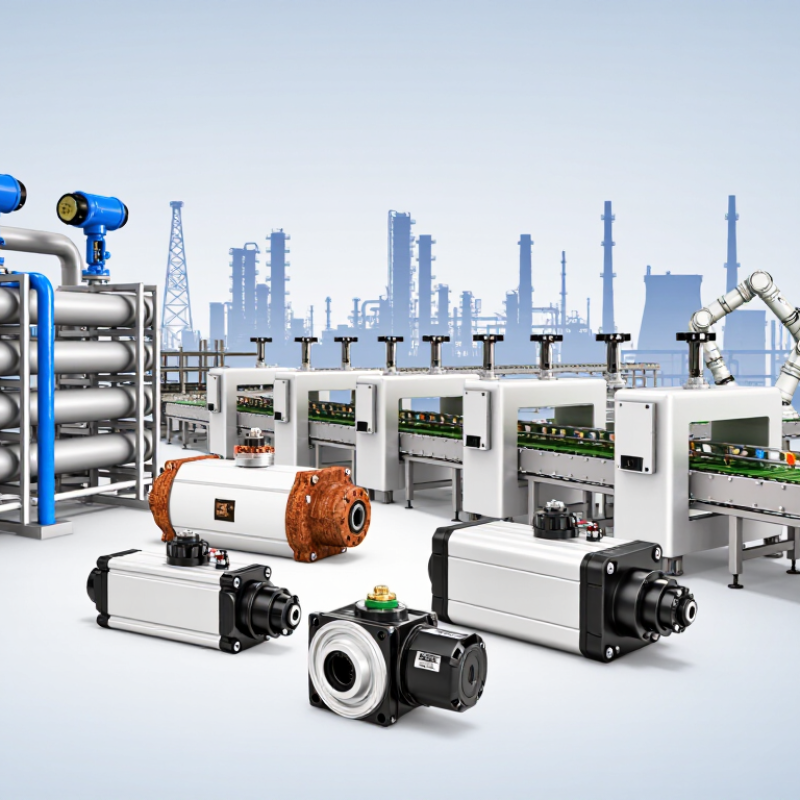
Top Electric Actuator Manufacturers in the World

What Electric Actuators Are and Where They Are Used

Electric actuators convert electrical energy into controlled linear or rotary motion. They usually contain a motor, gearbox, drive, and feedback system. Unlike pneumatic units, they do not require compressed air infrastructure.

That can simplify installation and reduce leakage-related losses.

Their applications are practical and visible. In water treatment plants, actuators position valves during filtration and chemical dosing. In factories, they adjust dampers, conveyors, clamps, and robotic tools. Buildings use them for air-control dampers, heating valves, and fire-safety systems.

IEC 60534 provides guidance for control valves and their performance. The U.S. Department of Energy reports that motor-driven systems consume more than half of industrial electricity in American manufacturing. Efficient actuator selection therefore affects both motion quality and operating costs.

Market demand is also expanding. Grand View Research estimated the global electric actuator market at roughly USD 8 billion in 2023 and projected strong growth through 2030.

However, market forecasts are not operating guarantees. Real performance depends on duty cycle, load, speed, enclosure rating, and maintenance quality.

A smaller actuator may overheat under repeated cycling. An oversized unit may waste energy and reduce control accuracy.

That detail is often missed. Field engineers should check torque margins, emergency behavior, feedback resolution, and local safety requirements before choosing equipment.

The best manufacturers usually provide test data, service documentation, and application support, not merely a catalog rating.

How Leading Electric Actuator Manufacturers Are Evaluated

Evaluating leading electric actuator manufacturers requires more than comparing prices or catalog photos. Start with application fit: torque range, duty cycle, response time, enclosure rating, and operating temperature. A reliable manufacturer should explain these figures clearly. Vague specifications deserve careful questions. Real engineering experience appears in practical details, such as cable protection, manual override design, and failure behavior during power loss.

Quality evidence matters. Review documented factory testing, material traceability, calibration records, and relevant safety certifications. Ask whether each actuator undergoes load, endurance, and environmental tests before shipment. Technical support is equally important. Skilled engineers should help with sizing, installation, wiring, and maintenance planning. Their answers should match the product data, not contradict it. Site references can add authority, but they are not perfect proof. Different systems create different stresses.

Tips: Request a sample test report. Check actual noise levels and positioning accuracy. Confirm spare-part availability and response times. A pilot installation may reveal weaknesses hidden by laboratory results. Do not judge reliability from one successful demonstration. Long service life depends on design, installation, control settings, and maintenance. Even experienced evaluators can overlook vibration or unexpected cycling. That is why transparent evidence, field knowledge, and honest limitations should guide the final decision.

Global Regions Shaping the Electric Actuator Industry

Electric actuator manufacturing is increasingly shaped by regional demand, not factory capacity alone. Asia-Pacific remains the strongest production and adoption center. The International Federation of Robotics reported 541,302 industrial robots installed worldwide in 2023; Asia represented about 70%. That concentration supports local suppliers of servo drives, linear systems, and precision controls. However, the map is not perfectly balanced.

Europe is pushing compact, energy-efficient motion systems through factory modernization and stricter efficiency goals. North America is emphasizing warehouse automation, process equipment, and resilient domestic supply chains.

The IEA’s Electricity 2024 report expects global electricity demand to grow about 4% in 2024 and 2025. This strengthens the case for electrically controlled valves, dampers, and lifting mechanisms. Yet growth estimates vary sharply because reports define “electric actuator” differently. That limitation deserves attention.

Tips: Compare regional service coverage, ingress protection, duty cycles, and spare-parts availability before selecting a manufacturer. Request test data under real loads, not only nominal force ratings. For exporters, certification and local technical support can matter as much as price. A reliable shortlist should combine report data with site experience.

Profiles of Top Electric Actuator Manufacturers

Top Electric Actuator Manufacturers in the World

Leading electric actuator manufacturers differ in engineering focus, testing depth, and customer support. Their profiles reveal how design choices affect real installations.

One established manufacturer specializes in quarter-turn actuators for valves and dampers. Its engineers test torque output across changing temperatures. They also verify enclosure protection against dust and water. Field technicians often inspect cable glands, mounting alignment, and manual override access. Small details matter.

Another global manufacturer focuses on linear actuators for process equipment, packaging lines, and water facilities. Its product teams combine brushless motors, position sensors, and programmable controls. Engineers commonly measure stroke accuracy, operating noise, and duty-cycle stability. A reliable profile includes documented factory testing and traceable component records. Independent certification adds credibility, but it does not replace practical evaluation. Installation errors still happen.

A third manufacturer builds compact actuators for building automation and energy systems. Its specialists emphasize low power consumption, network communication, and simple commissioning. Demonstration units often show feedback signals on a control panel. That detail helps maintenance teams diagnose faults faster. However, some product literature can sound more confident than field results. Buyers should compare test conditions, warranty terms, spare-part access, and regional service coverage. Real performance depends on correct sizing and honest application data.

Key Technologies, Applications, and Industry Standards

Leading electric actuator manufacturers compete through engineering depth, not advertising alone. Their systems combine motors, gear trains, position sensors, drives, and protective controls. Brushless motors can improve efficiency and service life. Absolute encoders preserve position data after power loss. That matters.

Selection begins with the application. Quarter-turn actuators suit ball, butterfly, and plug valves. Linear units support dampers, gates, and precision positioning equipment. In a wastewater plant, sealed housings resist moisture and chemical splashes. In packaging machinery, low backlash helps maintain repeatable movement. Food-processing installations may require smooth surfaces and careful material choices.

Standards make comparisons more reliable. ISO 5211 helps verify valve and actuator mounting dimensions. IEC 60529 defines enclosure protection ratings, such as IP65 or IP67. IEC 60204-1 addresses electrical equipment used in machinery. Electromagnetic compatibility requirements also deserve attention, especially near variable-speed drives. A higher torque rating is not automatically safer. Poor sizing can cause overheating, slow response, or unnecessary cost. I have seen clean specifications fail because cable length and ambient temperature were ignored. That is a practical gap. Engineers should examine duty cycles, fail-safe behavior, manual overrides, noise, maintenance access, and diagnostic records. Testing under real load remains more convincing than a catalogue number. Industry standards help, but they cannot replace careful site verification.

Top Electric Actuator Manufacturers in the World — Key Technologies, Applications, and Industry Standards
Actuator Technology Typical Operating Characteristics Representative Output Range Primary Applications Key Technical Advantages Common Limitations Relevant Standards
AC Induction Motor Actuator Fixed-speed or variable-speed operation using an induction motor and gearbox.
Common supply classes include single-phase and three-phase AC systems.
Torque: approximately 10–10,000 N·m
Travel speed: approximately 4–180 rpm
Continuous or intermittent duty
Industrial valves, water and wastewater plants, heating and ventilation systems, process-control equipment, and material-handling mechanisms. Robust construction, broad power availability, relatively low maintenance, and good suitability for high-load applications. Lower positioning accuracy than servo systems; gearbox backlash and motor heating may limit frequent starts or precise motion. IEC 60034-1
IEC 60529
IEC 60204-1
ISO 5211
Permanent-Magnet / Brushless DC Actuator Electronic commutation with permanent magnets and position feedback or sensorless control. Often paired with a planetary or worm gearbox. Torque: approximately 0.1–2,000 N·m
Speed: up to several thousand rpm at motor shaft
High start-stop capability
Robotics, medical equipment, packaging machinery, battery-powered systems, automated dampers, and compact process actuators. High power density, efficient operation, low acoustic noise, fast dynamic response, and compact packaging. Requires electronic drive control; permanent magnets and control electronics can increase cost and thermal-management requirements. IEC 60034-1
IEC 61800 series
IEC 60529
IEC 60204-1
Stepper Motor Actuator Open-loop or closed-loop incremental motion using discrete electrical steps. Holding torque is available when energized. Torque: approximately 0.05–100 N·m
Typical step angle: 0.9° or 1.8°
Best suited to low-to-moderate speeds
Laboratory instruments, light-duty linear stages, dosing equipment, small valves, 3D printers, and indexing mechanisms. Simple digital control, repeatable incremental positioning, strong low-speed torque, and no mandatory position sensor in open-loop designs. Possible loss of synchronism under overload; resonance, vibration, and heat generation may occur at unsuitable speeds or loads. IEC 60204-1
IEC 60529
ISO 12100
Applicable EMC requirements
AC or DC Servo Actuator Closed-loop position, velocity, and torque control using an encoder or resolver with a dedicated servo drive. Torque: approximately 0.1–10,000 N·m
High acceleration and deceleration capability
Continuous and peak torque ratings
CNC equipment, industrial robots, semiconductor equipment, printing machinery, synchronized production lines, and precision assembly. High positioning accuracy, excellent repeatability, rapid response, overload capability, and coordinated multi-axis motion. Higher system cost and commissioning complexity; encoder, cable, and drive selection must be matched carefully. IEC 61800 series
IEC 61800-5-2
IEC 60204-1
ISO 13849-1
Linear Electric Actuator Rotary motor motion converted into linear motion through a screw, belt, rack-and-pinion, or roller mechanism. Force: approximately 100–100,000 N
Stroke: approximately 25–2,000 mm
Speed depends on screw pitch and load
Industrial lifting, machine guarding, ergonomic workstations, agricultural machinery, solar tracking, medical beds, and automation fixtures. Accurate force and position control, clean operation compared with hydraulic systems, and straightforward integration with sensors and controllers. Screw efficiency, duty cycle, side-load sensitivity, and thermal limits must be considered; some designs require external guiding. IEC 60204-1
ISO 12100
ISO 13849-1
IEC 60529
Quarter-Turn Valve Actuator Produces approximately 90° of rotary movement for ball, butterfly, and plug valves. May include manual override, limit switches, and torque protection. Torque: approximately 5–4,000 N·m
Typical travel: 90°
On/off or modulating control
Water treatment, HVAC, chemical processing, compressed-air systems, food processing, and general industrial fluid control. Compact installation, rapid operation, reliable end-position control, and compatibility with common quarter-turn valve interfaces. Unsuitable for multi-turn valves without additional gearing; torque demand can increase significantly with pressure, temperature, or media conditions. ISO 5211
IEC 60529
EN 15714-2
IEC 60204-1
Multi-Turn Valve Actuator Produces multiple revolutions and axial thrust through a gearbox or stem-nut arrangement for gate, globe, and sluice valves. Torque: approximately 10–10,000 N·m
Thrust: up to several hundred kilonewtons
Multi-turn travel with configurable limits
Municipal water networks, power generation, oil and gas processing, chemical plants, irrigation, and large-scale utility systems. Handles high stem loads, supports long valve travel, and can provide accurate throttling or reliable isolation service. Larger footprint and slower operation than quarter-turn designs; stem alignment, thrust capacity, and valve seating must be verified. ISO 5210
EN 15714-2
IEC 60529
IEC 60204-1
Smart Networked Actuator Electric actuator with embedded diagnostics, local configuration, sensor monitoring, and industrial communication such as fieldbus or Ethernet-based protocols. Torque: approximately 5–10,000 N·m
Digital position, torque, temperature, and alarm data
Local or remote control
Smart factories, water infrastructure, building automation, process plants, predictive maintenance systems, and distributed equipment. Remote commissioning, condition monitoring, event logging, easier integration with supervisory systems, and improved maintenance visibility. Greater cybersecurity, network-configuration, software, and interoperability requirements; loss of communication must be addressed in the control design. IEC 62443
IEC 61158 / IEC 61784
IEC 60529
IEC 60204-1
Technical figures are representative industry ranges rather than specifications for a particular manufacturer or product. Actual performance depends on motor rating, gearbox ratio, load profile, duty class, ambient conditions, enclosure rating, control mode, and application-specific sizing. Standards and editions should be verified for the target market and installation.

FAQS

What should buyers compare when evaluating electric actuator manufacturers?

Compare engineering depth, factory testing, warranty terms, spare-part access, and regional technical support. Real service quality matters after installation.

Which actuator type suits a quarter-turn valve?

Quarter-turn actuators suit ball, butterfly, and plug valves. Check torque, mounting dimensions, operating temperature, and manual override access.

When are linear electric actuators more suitable?

Linear units support dampers, gates, packaging equipment, and precise positioning systems. Stroke accuracy and backlash deserve careful testing.

Which technologies can improve actuator performance?

Brushless motors can reduce wear and energy use. Absolute encoders retain position data after power loss. Programmable controls support flexible operation.

Why are enclosure protection ratings important?

Sealed housings help resist dust, water, and chemical splashes. Ratings such as IP65 or IP67 provide a useful comparison, not a complete guarantee.

Which standards should engineers check before installation?

ISO 5211 helps verify mounting dimensions. IEC 60529 covers enclosure protection. IEC 60204-1 addresses electrical equipment used in machinery.

What application details affect actuator sizing?

Engineers should review load torque, duty cycle, ambient temperature, cable length, response speed, and fail-safe behavior. A higher torque rating is not automatically safer.

How can maintenance teams diagnose actuator faults faster?

Feedback signals, position sensors, and clear diagnostic records can reveal faults on a control panel. Installation errors still happen. Site verification remains essential.

What practical details are often missed during installation?

Inspect cable glands, mounting alignment, manual access, noise, and maintenance clearance. Clean specifications can still fail under real loads.

Can manufacturer testing replace field evaluation?

No. Factory tests are valuable, but actual temperature, moisture, wiring, and load conditions may differ. I may be too cautious, but real sites disagree.

Conclusion

An Electric Actuator is a device that converts electrical energy into controlled mechanical motion, enabling the opening, closing, positioning, or adjustment of equipment. These actuators are widely used in industrial automation, process control, water treatment, energy systems, manufacturing, transportation, and building management. This article explains how electric actuators work, where they provide value, and why their precise control, low maintenance needs, and flexible integration make them important across modern industries.

It also examines how leading manufacturers are evaluated through product reliability, motion accuracy, energy efficiency, customization, safety, service support, and compliance with recognized industry standards. The discussion considers the influence of major global regions on research, production, and market development, while comparing common technologies such as rotary and linear actuation, smart monitoring, feedback control, and network connectivity. By reviewing key applications and performance requirements, readers can better understand the factors that shape the global Electric Actuator industry and guide future equipment selection.

Mason

Mason

Mason is a seasoned marketing professional with a deep expertise in the company's offerings and a passion for driving brand awareness. With a strong background in digital marketing strategies, he has an innate ability to connect with diverse audiences and effectively communicate product benefits.......