Top 10 Hydraulic Motor Types You Should Know About?
In the world of machinery, understanding hydraulic motors is crucial. Hydraulic motors are vital components in many industrial applications. According to Dr. Emily Walsh, an expert in fluid dynamics, “The right hydraulic motor can significantly enhance machinery efficiency.” This underscores the importance of selecting the appropriate type for specific tasks.
The variety of hydraulic motor types can be overwhelming. Each type serves unique functions, impacting performance and longevity. For instance, gear motors offer efficiency in small spaces, while piston motors provide high torque for heavy-duty applications.
While many consider hydraulic motors interchangeable, the reality is different. Each type comes with its strengths and weaknesses, shaping the performance of the entire system. Knowing which motor to choose demands detailed understanding and analysis, often requiring a moment of reflection. As we explore the top ten hydraulic motor types, it’s essential to weigh their pros and cons, ensuring the right fit for your needs.
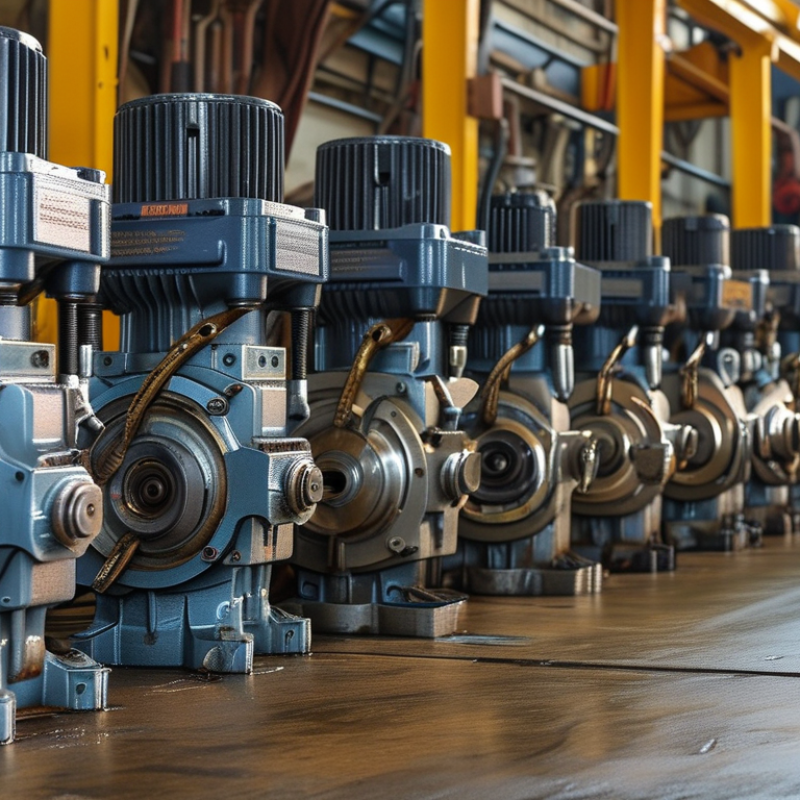
Overview of Hydraulic Motors and Their Applications
Hydraulic motors play a crucial role in various industrial sectors. They convert hydraulic energy into mechanical energy, making them essential in applications like construction equipment and automotive systems. According to a report by MarketsandMarkets, the global hydraulic motors market was valued at approximately $2.5 billion in 2020 and is expected to reach $3.2 billion by 2025. This growth highlights the increasing demand for hydraulic systems across industries.
The applications of hydraulic motors are diverse. They are commonly found in machinery like forklifts, compressors, and conveyor systems. In mobile applications, hydraulic motors provide high torque at low speeds. These motors are also effective in rotating equipment, such as winches and cranes. However, challenges persist in ensuring efficiency and reliability. Issues like fluid leakage and maintenance can impact performance. Understanding these factors is essential for optimizing hydraulic motor selection and usage.
While hydraulic motors offer numerous advantages, their implementation is not without complications. Equipment operators often face challenges regarding compatibility with existing systems and efficiency losses in real-world conditions. Additionally, proper sizing and selection can be nuanced, requiring expertise to prevent operational issues. Acknowledging these complexities allows engineers to make more informed decisions about hydraulic motor integration in design.
Top 10 Hydraulic Motor Types You Should Know About - Overview of Hydraulic Motors and Their Applications
| Motor Type | Description | Applications | Advantages |
|---|---|---|---|
| Gear Motor | Uses gears to convert hydraulic energy into mechanical energy. | Construction, agriculture, and marine applications. | High efficiency and good torque characteristics. |
| Gearless Motor | Directly converts hydraulic pressure to motion without gears. | Mobile construction equipment and forestry machines. | Fewer parts, reduced maintenance, and greater reliability. |
| Vane Motor | Uses sliding vanes to convert hydraulic energy to rotational force. | Material handling and robotics. | Smooth operation and relatively simple design. |
| Piston Motor | Uses piston chambers to convert hydraulic fluid pressure into motion. | Heavy equipment and industrial machinery. | High torque output and efficiency. |
| Orbital Motor | Has a rotating group with an eccentric input shaft. | Agricultural tractors and mobile machinery. | Compact size and high performance in tight spaces. |
| Swashplate Motor | Utilizes a swashplate to convert hydraulic pressure into rotary motion. | Aviation and automotive applications. | High speed and variable displacement capability. |
| Hydraulic Wheel Motor | Drives wheels directly using hydraulic power. | Specialized vehicles and terrain navigation. | Increased traction and maneuverability. |
| Hydrostatic Motor | Converts hydraulic energy into mechanical power with variable speed. | Excavators and cranes. | Excellent load handling and control. |
| Linear Hydraulic Motor | Produces linear motion through hydraulic pressure. | Automation and assembly lines. | Precise control over motion and speed. |
FAQS
: Hydraulic motors convert hydraulic energy into mechanical energy for various industrial applications.
The main types are gear, vane, and piston motors. Each has specific advantages and limitations.
Gear motors are simple and durable, with about 85% efficiency. They're great for high torque applications.
Vane motors offer flexibility and can operate at variable speeds, but their efficiency drops under high pressure.
Piston motors provide high torque and pressure capabilities, achieving over 90% efficiency but are complex to maintain.
Vane motors are used in mining, construction, and manufacturing, often in lifts and drilling equipment.
Vane motors may face cavitation if not calibrated correctly, leading to reduced performance and higher costs.
Vane motors can experience fluctuations due to temperature and fluid viscosity, impacting efficiency.
The right motor affects both performance and long-term operational costs, requiring careful evaluation of each type.
Engineers should consider efficiency, application requirements, and potential maintenance issues to ensure optimal performance.
Conclusion
Hydraulic motors are essential components in various industrial applications, converting hydraulic energy into mechanical work. Understanding the different types of hydraulic motors is crucial for selecting the right one for specific tasks. This article provides a comparative analysis of hydraulic motors, focusing on gear motors, vane motors, and piston motors, each with unique mechanisms and advantages tailored to different operational needs.
Gear motors are praised for their simplicity and reliability, making them ideal for applications requiring steady torque. Vane motors offer versatility and smooth operation, frequently utilized in mobile machinery, while piston motors are known for their high efficiency and performance in heavy-duty functions. By exploring these types, the article emphasizes the importance of choosing the appropriate hydraulic motor to optimize efficiency and effectiveness in various industrial settings.
