Choosing the top sprocket types in 2026 requires more than comparing catalog prices. A Sprocket must match the chain, shaft, speed, torque, and working environment. In a dusty conveyor room, a hardened roller-chain sprocket may outlast a cheaper untreated model. In a compact machine, a timing sprocket can deliver accurate movement with less adjustment. Silent-chain sprockets remain valuable where smooth motion and reduced noise matter.
This guide examines roller-chain, conveyor, timing, silent-chain, split, and engineered sprocket designs. It considers tooth profiles, material grades, surface treatments, bore options, and maintenance access. These details affect service life. They also influence downtime, alignment, and replacement cost. Real equipment rarely operates under perfect conditions. Misalignment, shock loading, poor lubrication, and contamination can change the result quickly.
No single type is best.
That point deserves attention. Selection should follow measured operating data, not only marketing claims. Reliable manufacturers usually provide dimensional drawings, material information, tolerance details, and compatibility guidance. Independent standards and documented testing can strengthen those claims. However, published ratings may not represent every field situation. A machine carrying wet aggregate behaves differently from one driving a clean packaging line.
The following sections compare each sprocket type through practical performance, common applications, weaknesses, and installation considerations. They also identify where newer designs may improve efficiency without ignoring proven mechanical principles. Some recommendations may remain debatable. That is useful. Careful review often reveals overlooked loads, unusual wear patterns, or maintenance habits that specifications cannot fully predict.
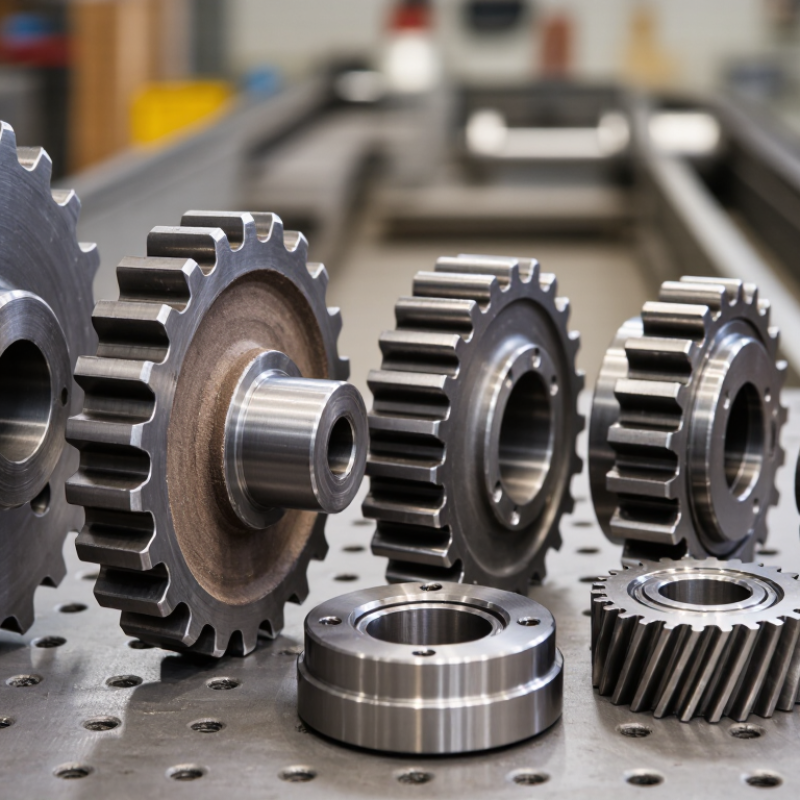
In 2026, a sprocket type is defined by more than tooth count. It reflects geometry, chain compatibility, load behavior, and operating conditions. Standard, idler, duplex, triplex, split, and taper-bore sprockets serve different mechanical needs. The correct choice begins with pitch, roller diameter, tooth profile, and shaft arrangement. Not just teeth.
Grand View Research estimates the industrial chain drives market reached about USD 4.1 billion in 2023. Its forecast indicates roughly 4.7% annual growth through 2030. MarketsandMarkets also identifies manufacturing, logistics, and material handling as major demand sectors in its 2024 chain drives analysis. These figures explain the growing interest in quieter, longer-lasting sprocket designs. However, market growth does not make every “premium” type suitable. A small conveyor may need a simple single-strand sprocket, while a high-load drive may require duplex or triplex geometry.
Material and maintenance now define type selection more clearly. Hardened steel supports repeated impact and high torque. Stainless alloys resist moisture and cleaning chemicals. Split sprockets reduce downtime because technicians can replace them without removing the shaft. ISO and ANSI dimensions improve interchangeability, but field conditions still matter. Dust, misalignment, vibration, and poor lubrication can defeat an otherwise excellent design. No classification is perfect. A catalog choice may look right, yet inspection often reveals uneven tooth wear or shaft runout. In 2026, the best sprocket type is the one matched to measurable duty, not marketing language.
What Are the Top Sprocket Types in 2026?
Roller chain sprockets remain essential in conveyors, mixers, pumps, packaging lines, and agricultural machinery. They transfer torque through matching chain teeth and rollers. Simple work. Reliable alignment matters more than flashy specifications. Standard single-strand sprockets suit light and moderate loads. Duplex and triplex types support higher power without requiring a much larger diameter. Idler sprockets guide slack chain runs, while split sprockets simplify replacement around fixed shafts. Tapered-bore designs can improve installation accuracy and reduce fitting time.
Material choice depends on the working environment. Hardened steel teeth resist wear during frequent starts and stops. Stainless steel helps in damp or washdown areas, although it may not always provide the highest wear resistance. Engineering plastic can reduce noise and weight, but heat and shock loads require careful checking. In practical maintenance, the chain and sprocket should be replaced together when tooth profiles become hooked. A new sprocket on an elongated chain often wears quickly. That mistake is easy to repeat.
Tips: Count the chain pitch before ordering. Check shaft diameter, keyway size, and tooth profile. Keep the shafts parallel. Apply suitable lubrication, but avoid excess buildup near dusty equipment. Inspect for vibration, tight spots, and uneven tooth wear every service cycle. Record measurements with photographs. This small habit improves future decisions. However, inspection intervals should reflect actual load, speed, moisture, and contamination, not a fixed calendar alone. Even experienced technicians can overlook misalignment after a hurried repair.
How roller chain sprockets support general machinery through efficient power transmission, accurate timing, and controlled chain movement.
The chart shows the theoretical polygonal speed variation indicator for common drive sprocket tooth counts, calculated as sec(π/N) − 1, where N is the number of teeth. Sprockets with more teeth generally provide smoother chain engagement, lower vibration, and more stable motion, while smaller sprockets are useful when compact dimensions and higher speed reduction are required.
Common sprocket configurations include plate sprockets for compact machinery, hub sprockets for heavier shaft loads, double-hub sprockets for flexible mounting, and idler sprockets for chain tension and routing.
Engineering sprockets remain essential in high-performance drive systems because they are designed around real operating conditions. Roller chain sprockets suit general power transmission, while silent chain sprockets reduce vibration at higher speeds. Double-pitch types support longer conveyor runs with fewer chain engagements. Engineered conveyor sprockets handle heavy loads, abrasive dust, and frequent starts.
Material selection matters. Hardened steel teeth resist wear when torque rises sharply. Stainless steel helps in damp or corrosive work areas. Larger hubs can improve shaft stability, especially when a conveyor carries uneven loads. Accurate tooth spacing also protects the chain from impact and premature elongation. Small errors become expensive quickly.
Field inspections often reveal simple problems. A polished tooth face may indicate poor alignment, not poor material. A loose keyway can create rhythmic noise before failure. Engineers should check bore size, pitch, tooth profile, hardness, and lubrication together. Relevant chain standards provide a useful specification baseline, but they cannot replace site measurements.
A perfect setup is rare. I would not select a sprocket from load data alone. Temperature, contamination, shock loading, and maintenance access can change the result. In one dusty line, a slightly slower drive with sealed protection may outperform a faster, finely tuned system. Performance depends on the whole assembly.
What Are the Top Sprocket Types in 2026?
Specialty sprockets are gaining importance where standard parts cannot maintain exact chain movement. Precision-machined sprockets support robotic indexing, packaging lines, medical equipment, and compact conveyors. Their tooth profiles reduce vibration, while hardened surfaces resist repeated impact. According to the 2024 Chain Drives Market report by MarketsandMarkets, the sector is projected to grow at approximately 5% annually through 2029. That growth reflects demand for dependable power transmission, not simply higher production volume.
Taper-lock sprockets simplify replacement and reduce alignment errors during maintenance. Duplex and triplex sprockets suit systems requiring greater load capacity without enlarging the drive. Stainless steel versions perform better in humid, washable environments, although material selection still needs careful review. ISO 606 and ANSI B29.1 provide useful dimensional references, but compliance alone cannot guarantee reliability. Shaft runout, lubrication, chain elongation, and installation accuracy remain critical.
Field inspections often reveal a simple problem: the sprocket is blamed before alignment is checked. A 2023 report from Grand View Research identifies automation and material handling as major growth areas for industrial chain drives. In these applications, custom tooth geometry can improve engagement and reduce shock loading. Still, customization may increase cost and replacement time. That trade-off deserves honest evaluation. The best 2026 sprocket is not always the most advanced; it is the one matched precisely to load, speed, environment, and maintenance skill.
| Sprocket Type | Typical Chain or Application | Precision and Reliability Benefit | Key Design Characteristics | Best-Fit Industries | Important Selection Considerations |
|---|---|---|---|---|---|
| Single-Strand Roller Chain Sprocket | Standard simplex roller chains used for general power transmission | Provides predictable speed transmission, straightforward installation, and dependable performance when alignment and lubrication are controlled. | One chain row; commonly manufactured with hardened tooth surfaces and finished bores or pilot bores. | Material handling, packaging, agricultural equipment, light industrial machinery | Match chain pitch, roller diameter, tooth count, bore, keyway, and operating speed. |
| Multi-Strand Roller Chain Sprocket | Duplex, triplex, and other multiple-row roller chains | Transmits higher loads without requiring a proportional increase in sprocket diameter, helping maintain compact drive layouts. | Two or more precisely spaced tooth rows; requires correct strand alignment and matching chain construction. | Conveyors, compressors, machine tools, heavy-duty industrial drives | Check transverse alignment, shaft deflection, load distribution, and the number of chain strands. |
| Double-Pitch Sprocket | Double-pitch conveyor chains used at moderate speeds | Supports economical conveying over longer distances and can reduce the number of chain engagements per revolution. | Designed for double-pitch chain geometry; available with standard or carrier-roller engagement profiles. | Packaging, assembly lines, warehousing, parts transfer systems | Use a suitable tooth profile for standard or carrier rollers and avoid applications requiring very high speed. |
| Conveyor Sprocket | Attachment chains, tabletop chains, hollow-pin chains, and specialized conveyor chains | Improves indexing accuracy and reduces chain jumping when the sprocket profile matches the conveyor chain and guide system. | May include integral hubs, replaceable segments, low-friction materials, or corrosion-resistant construction. | Food processing, bottling, logistics, pharmaceutical and clean production lines | Consider sanitation requirements, washdown exposure, chain attachment geometry, and conveyor tracking. |
| Idler Sprocket | Roller-chain systems requiring chain guidance or tension control | Maintains chain engagement and helps manage slack, reducing vibration and the risk of chain derailment. | Often mounted on a bearing or adjustable arm; may use a hardened tooth profile for wear resistance. | Compact drives, agricultural machinery, indexing mechanisms, tensioning systems | Avoid excessive tension; verify bearing capacity, adjustment range, and the direction of chain wrap. |
| Split or Detachable Sprocket | Maintenance-intensive drives where shaft removal is difficult | Shortens replacement time and reduces maintenance disruption because the sprocket can be removed without dismantling the shaft or adjacent equipment. | Two-piece or segmented construction with bolted joints and a machined locating interface. | Conveyors, wastewater equipment, large fans, industrial processing machinery | Confirm joint strength, bolt torque, shaft clearance, concentricity, and access for inspection. |
| Taper-Bushed Sprocket | Industrial roller-chain drives requiring flexible shaft mounting | Provides secure clamping, repeatable positioning, and convenient replacement while reducing the need for custom-bored components. | Uses a tapered bushing, keyway, and clamping screws to connect the sprocket to the shaft. | Pumps, mixers, conveyors, fans, general process machinery | Select the correct bushing bore, shaft tolerance, key size, and tightening procedure. |
| Engineering-Class Sprocket | Conveyor, bucket elevator, drag conveyor, and heavy material-handling chains | Improves durability under shock loading, abrasive conditions, and high continuous loads when correctly matched to the chain. | Large tooth forms, robust hubs, replaceable teeth or segments, and optional hardened or wear-resistant surfaces. | Mining, cement, bulk handling, steel processing, energy infrastructure | Evaluate impact load, abrasive particles, operating temperature, shaft torque, and tooth replacement access. |
| Silent-Chain Sprocket | Inverted-tooth or silent-chain drives for smooth, high-speed transmission | Reduces polygonal action, vibration, and operating noise compared with many conventional roller-chain arrangements. | Uses toothed chain engagement with controlled tooth geometry and accurate axial alignment. | High-speed machinery, printing equipment, industrial automation, precision power transmission | Require exact chain-to-sprocket compatibility, precise center distance, adequate lubrication, and low shaft misalignment. |
| Corrosion-Resistant Sprocket | Roller or conveyor chains exposed to moisture, chemicals, or frequent washdown | Maintains tooth integrity and dimensional stability in corrosive environments, helping extend service intervals. | May use stainless steel, engineered polymer, protective coating, or a combination of corrosion-control treatments. | Food and beverage, marine equipment, chemical handling, water treatment | Balance corrosion resistance with load capacity, temperature range, wear rate, and applicable hygiene requirements. |
| Precision-Machined Sprocket | Servo-assisted, indexing, synchronized, and low-backlash chain systems | Improves repeatability through controlled tooth spacing, concentricity, axial runout, and bore accuracy. | Produced to tighter dimensional tolerances; may include ground bores, inspection records, and customized mounting features. | Robotics, semiconductor equipment, inspection systems, automated assembly | Specify allowable runout, tooth-profile tolerance, backlash, balancing needs, and environmental conditions. |
Selection note: Sprocket reliability depends on compatibility with the chain pitch, roller or tooth geometry, tooth count, shaft arrangement, alignment, lubrication, load profile, and operating environment.
Selecting a sprocket starts with the system, not the catalogue picture. A 2024 MarketsandMarkets report forecasts the global power-transmission market to approach USD 100 billion by 2029. That expansion increases choice, but it does not make sprockets interchangeable. Match the sprocket to the chain pitch, roller diameter, tooth profile, speed, and transmitted load. ANSI B29.1 and ISO 606 provide useful dimensional references.
For compact drives, simplex sprockets suit moderate loads and limited shaft space. Duplex or triplex versions distribute higher torque across multiple chain strands. Double-pitch sprockets can reduce cost in slower conveyor systems, but their tooth engagement may not suit shock loads. Stainless steel helps in washdown or humid areas. Hardened steel is usually better for abrasive, high-cycle service. Check bore size, keyway, hub length, and alignment before ordering. A small mismatch can produce vibration, rapid tooth wear, and an unexpectedly short service life.
Tips: Measure the installed chain instead of trusting memory. Calculate load and speed together. Inspect elongation, lubrication, and tooth hooking. The largest sprocket is not automatically the safest choice. Keep at least one spare for critical equipment. I would also challenge the usual “standard size” assumption; unusual duty cycles often expose weaknesses that a basic selection chart misses. Review the choice with maintenance records and the applicable manufacturer-neutral standard before installation.
Tooth count is only one factor. Type also depends on pitch, roller diameter, tooth shape, load, speed, and shaft arrangement. Operating conditions matter too.
Simplex sprockets suit moderate loads and compact drives. Duplex and triplex types handle higher torque across multiple chain strands. Split and taper-bore designs simplify maintenance.
Choose one when standard parts cause vibration, shock, or inaccurate chain movement. Precision profiles help robotic indexing, packaging lines, and compact conveyors. Customization can increase cost.
Check chain pitch, roller diameter, speed, load, and operating cycles. Double-pitch types may suit slower conveyors. They may perform poorly under sudden shock loads.
Hardened steel suits high torque, impact, and abrasive service. Stainless alloys resist moisture and cleaning chemicals. Material choice still needs an honest site review.
Yes. Technicians can replace it without removing the shaft. This can shorten downtime around guarded or crowded equipment. Check the joint and alignment carefully.
A small bore or keyway mismatch can create vibration. Misalignment may cause hooked teeth and uneven wear. Chain elongation can worsen the problem.
Measure the installed chain instead of trusting memory. Check tooth wear, shaft runout, lubrication, alignment, and chain elongation. A catalogue picture can mislead.
Not always. Size must match speed, load, shaft space, and chain geometry. A larger sprocket can still fail under poor lubrication or misalignment.
Review maintenance records and actual duty cycles. Keep one spare for critical equipment. I would question every “standard size” assumption. Field conditions often disagree.
In 2026, a Sprocket type is defined by more than its shape or tooth count. Its design reflects the chain standard, operating speed, load demands, installation conditions, and maintenance goals of a system. Roller chain sprockets remain a practical choice for general machinery because they provide dependable power transmission, straightforward installation, and flexible application across many mechanical systems. Their performance depends on correct alignment, suitable materials, and proper matching with the chain.
Engineering sprockets are developed for high-performance applications where greater strength, precision, wear resistance, and dimensional stability are essential. Specialty sprockets can further improve reliability in systems requiring accurate motion, compact layouts, unusual chain configurations, or demanding environmental performance. Selecting the best sprocket type requires evaluating torque, speed, duty cycle, space, noise, maintenance requirements, and expected service life. By matching the sprocket design to the system’s actual operating conditions, engineers can achieve smoother transmission, reduce wear, and support consistent long-term performance.