2026 Best Variable Frequency Drive Suppliers?
The search for the 2026 best Variable Frequency Drive suppliers begins with energy reality, not marketing claims. The International Energy Agency’s Energy Efficiency 2023 report states that industry consumes about 37% of global final energy. It also uses roughly 42% of global electricity. Motors sit at the center of that demand.
A Variable Frequency Drive can slow a pump, fan, or conveyor instead of forcing full-speed operation. That small adjustment may reduce heat, noise, and wasted electricity on the factory floor. The U.S. Department of Energy has repeatedly identified motor systems as major industrial energy users. Energy-efficiency analyst Steve Nadel has observed, “Motor systems are the single largest end use of electricity in the industrial sector.” His point remains practical. Supplier selection affects operating cost, maintenance, and production stability.
Market forecasts also show strong commercial momentum. Grand View Research estimates that the global variable frequency drive market reached approximately USD 24.34 billion in 2023. Its report projects continued growth through 2030, supported by factory automation, infrastructure upgrades, and energy-efficiency programs. Numbers vary between research firms. That is worth remembering.
The best supplier is not always the largest supplier. A reliable evaluation should examine drive efficiency, overload capacity, harmonic control, cybersecurity, service coverage, spare parts, and commissioning expertise. A polished brochure cannot replace a tested reference installation. This guide compares leading suppliers for 2026 through those practical measures, while recognizing an uncomfortable truth: even an advanced drive can underperform when sizing, programming, or maintenance is neglected.
What Is a Variable Frequency Drive and Why Does Supplier Choice Matter?
2026 Best Variable Frequency Drive Suppliers?
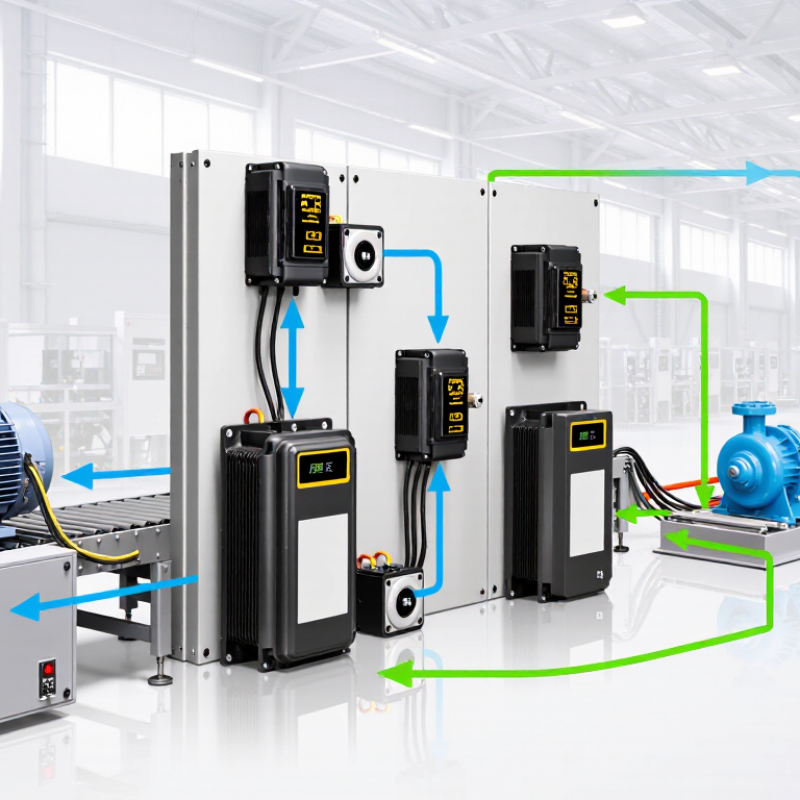
A variable frequency drive controls an AC motor by changing voltage and frequency. This allows pumps, fans, conveyors, and compressors to match real operating demand. The benefit is practical: less throttling, smoother starting, and potentially lower energy use. The International Energy Agency reported that electric motors consume about half of global electricity. Even modest control improvements can therefore affect operating costs and emissions.
Supplier choice matters because a drive is not an isolated box. It must communicate with control systems, tolerate heat and dust, and protect motors during unstable loads. U.S. Department of Energy guidance identifies motor-driven systems as major industrial electricity users. A capable supplier should provide tested sizing, harmonic advice, commissioning support, and replacement planning. Ask for measured case data, not only projected savings.
Field experience also exposes a weakness. Poorly configured drives can create nuisance trips, bearing damage, or unexpected downtime. The cheapest quotation may become expensive after installation. Check service response times, spare-part availability, cybersecurity procedures, and training quality. Request a written application review before purchase. It matters. No supplier fits every plant perfectly, and energy estimates remain uncertain without load measurements. That uncertainty deserves honest discussion, not polished promises.
2026 Best Variable Frequency Drive Suppliers? - What Is a Variable Frequency Drive and Why Does Supplier Choice Matter?
A variable frequency drive (VFD) controls an AC motor’s speed by adjusting the frequency and voltage supplied to it. The comparison below provides practical, brand-neutral criteria for assessing suppliers; requirements and ratings should always be confirmed against the specific motor, drive model, and application.
| Evaluation Dimension | Useful Facts and Options | What to Confirm with the Supplier | Why It Matters |
|---|---|---|---|
| Motor compatibility | VFDs commonly control AC induction motors; some models also support permanent-magnet or synchronous motors. | Supported motor types, nameplate data requirements, control modes, and commissioning procedure. | The drive must be configured for the motor and its load to deliver reliable control. |
| Supply voltage and phase | Common product classes include 200–240 V, 380–480 V, and 500–600 V; available input phase and voltage depend on the model and market. | Input voltage range, single- or three-phase supply, frequency, and any derating requirements. | A mismatch can prevent operation or require a different drive rating or installation design. |
| Motor power and current | Drive selection is based on the application and motor current as well as nominal power; product ranges vary by supplier and voltage class. | Continuous output-current rating, motor full-load current, ambient-temperature limits, and altitude derating. | Matching by kilowatts alone can overlook current demand and operating conditions. |
| Overload capability | Drives may provide separate normal-duty and heavy-duty ratings. Overload percentages and permitted duration are model-specific. | Rated overload current, time limit, duty-cycle conditions, and the rating applicable to the intended load. | Loads with high starting torque or frequent acceleration may need a higher-duty selection. |
| Application and load type | Common applications include fans, pumps, conveyors, mixers, and compressors; torque and starting requirements differ by load. | Application experience, sizing guidance, recommended control mode, and compatibility with the driven equipment. | Appropriate sizing and setup can improve process control and reduce avoidable trips. |
| Enclosure and environment | Enclosure protection is expressed using IP ratings under IEC 60529. Installation conditions can affect cooling and allowable output. | Required IP rating, operating temperature, humidity limits, dust exposure, ventilation, and panel-cooling needs. | The drive must suit its location; an enclosure rating does not by itself guarantee suitability for every environment. |
| Control and communications | Depending on the model, interfaces may include digital and analog I/O, relay outputs, and industrial network options. | Required protocols, I/O count, feedback options, network documentation, and integration support. | Compatible interfaces simplify connection to PLCs, sensors, and supervisory systems. |
| Braking and energy flow | Some applications need a braking resistor or another braking method; regenerative capability is a model-dependent option. | Stopping time, load inertia, braking duty, resistor requirements, and whether energy regeneration is needed. | Correct braking design is important for deceleration performance and equipment protection. |
| Standards and documentation | IEC 61800-5-1 addresses adjustable speed electrical power drive system safety; IEC 61800-3 addresses EMC requirements for these systems. | Applicable declarations, test information, installation instructions, wiring diagrams, and region-specific compliance documents. | Documentation helps engineers verify that the selected equipment is suitable for the installation and market. |
| Technical support and service | Support may include selection assistance, startup guidance, troubleshooting, training, and repair services; availability varies by location. | Local service coverage, response process, spare-parts availability, warranty terms, and escalation options. | Accessible support can reduce downtime over the drive’s service life. |
| Total cost of ownership | Purchase price is only one cost; installation, panel modifications, commissioning, maintenance, and energy use also contribute. | A complete quotation, included accessories, service costs, lead time, and any required filters or reactors. | Comparing lifecycle costs gives a more useful basis for supplier selection than comparing unit price alone. |
Selection note: Verify every rating and compliance claim against the current datasheet and installation manual for the exact drive model.
FAQS
Compare lifecycle cost, efficiency, overload capacity, service, and warranty terms. Purchase price alone can mislead. Include cooling, maintenance, filters, cables, software, freight, and installation costs.
Request efficiency curves, standby losses, harmonic data, braking performance, enclosure ratings, and overload limits. Ask for independent test reports. “Up to” savings claims need supporting evidence.
Share the motor rating, load profile, cable length, ambient temperature, and installation location. Ask for sizing examples involving pumps, conveyors, or compressors. Small details matter.
Yes. Test one unit under a real load. Observe temperature, noise, faults, and control response. A spreadsheet may look perfect. The factory rarely behaves perfectly.
Request a sample commissioning plan. Check response times, local engineers, training quality, and fault-diagnosis procedures. Test remote support during your operating hours. Support can be slower than promised.
Ask for a complete five-year estimate. Include the drive, keypad, reactor, cables, software, freight, installation, and maintenance. Low quotations may hide costly exclusions.
Confirm regional inventory and realistic delivery dates in writing. Ask about spare parts for at least ten years. Review end-of-life support and replacement procedures. Written promises matter.
Review access controls, update policies, firmware management, and parameter backups. Confirm safe replacement procedures. Cybersecurity plans may appear complete, but practical testing is still necessary.
Use a weighted comparison sheet covering performance, service, evidence, delivery, and ownership cost. Weighting is useful but subjective. Recheck the scores after witnessed testing and reference calls.
Conclusion
Choosing the right Variable Frequency Drive supplier in 2026 requires more than comparing product prices. A reliable supplier should provide efficient, durable, and adaptable drives that support precise motor control, energy savings, safe operation, and compatibility with modern industrial systems. Evaluation should include product performance, power range, installation requirements, technical documentation, customization options, warranty coverage, training, maintenance, and response times for technical support.
The strongest suppliers will distinguish themselves through complete lifecycle service, transparent pricing, dependable delivery, and global support capabilities. Buyers should also consider emerging trends such as smart monitoring, connected equipment, predictive maintenance, improved energy efficiency, cybersecurity, and integration with automation platforms. By comparing product quality, service resources, total ownership costs, and long-term technology development, organizations can select a supplier that meets current operational needs while remaining flexible for future expansion and changing industrial requirements.
